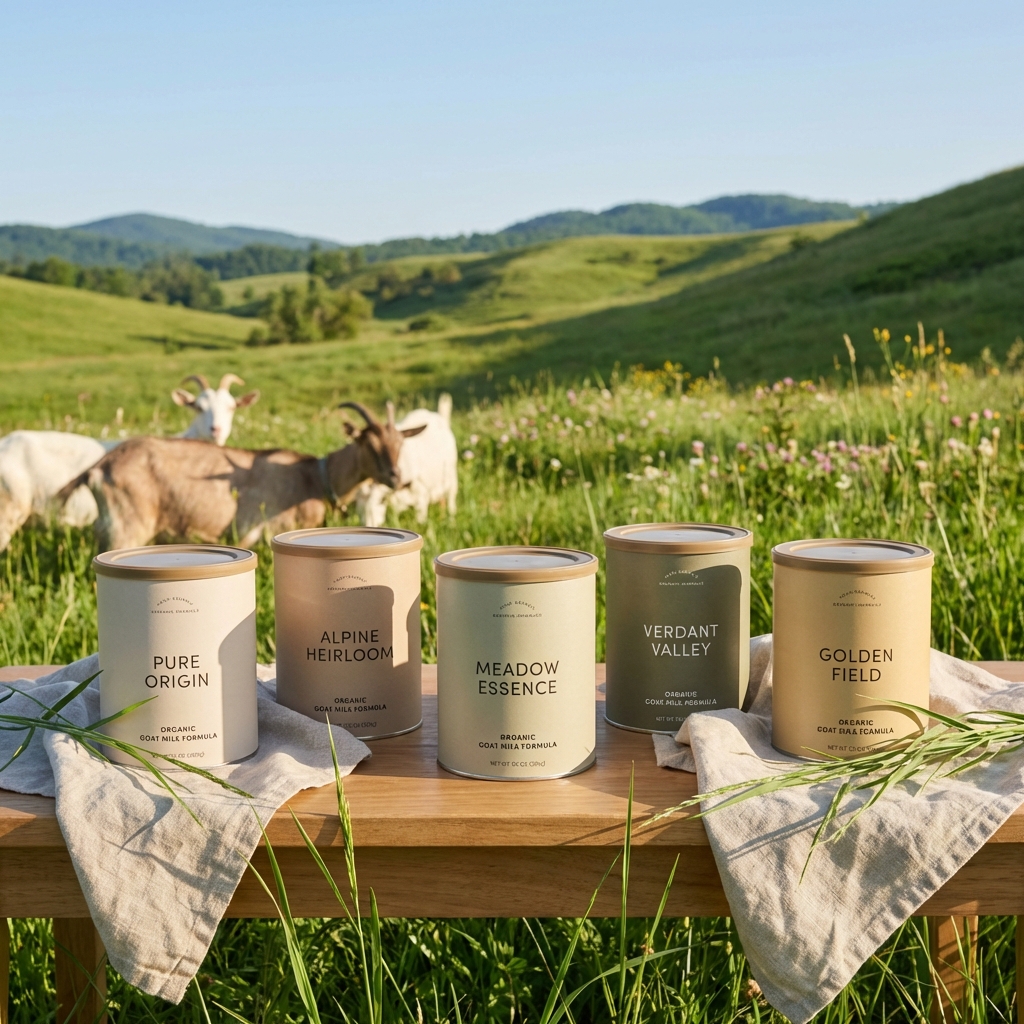
Best Infant Goat Milk Formula Complete Guide
Key Takeaways
- Goat milk infant formulas represent a specialized category gaining traction among parents seeking alternatives to cow milk-based options.
- European formulations - particularly those certified by Demeter or Bioland - offer superior organic standards and stricter regulatory oversight than many mass-market alternatives.
- HiPP Organic Goat Milk Formula and Holle Goat Milk Formula lead the market with Demeter certification, while Nanny Care provides accessible UK-regulated options.
- The optimal choice depends on your infant's digestive tolerance, budget constraints, and certification priorities.
Understanding Goat Milk Formula: The European Knowledge Gap
Why Goat Milk Differs from Cow Milk
Goat milk contains naturally smaller fat globules and different protein structures compared to conventional cow milk formulas. This structural difference creates easier digestibility for some infants, particularly those experiencing cow milk protein sensitivity. The protein composition includes higher levels of beta-casein and lower alpha-s1-casein, reducing potential allergenic responses.
European manufacturers have invested significantly in goat milk formula research, yet this knowledge remains fragmented across regional markets. North American consumers often lack access to comprehensive technical data about European formulations, creating an information vacuum that this guide addresses.
Regulatory Framework Differences
European Union regulations impose stricter compositional requirements than many international standards. Formulas must meet Regulation (EU) 2016/127, which mandates specific nutrient ranges, contaminant limits, and manufacturing protocols. This regulatory rigor distinguishes European products from less-regulated alternatives.
The "European Knowledge Gap" refers to the limited availability of detailed technical specifications for European goat milk formulas in English-language resources. Most comprehensive data remains locked within European regulatory databases, manufacturer technical sheets, and regional pediatric literature.
Demeter Certification: The Gold Standard
What Demeter Certification Means
Demeter represents the world's oldest and most rigorous biodynamic certification system, established in 1924. Unlike standard organic certifications, Demeter requires adherence to biodynamic agricultural principles, including specific planting calendars, compost preparations, and holistic farm management practices.
For infant formula, Demeter certification guarantees:
- Zero synthetic pesticides or herbicides across the entire supply chain
- No GMO ingredients or GMO-derived processing aids
- Biodynamic farming practices for all primary ingredients
- Independent annual audits with unannounced inspections
- Traceability documentation for every ingredient batch
Demeter Standards vs. Standard Organic
Standard organic certification (EU Organic Regulation 2018/848) prohibits synthetic inputs but permits certain approved substances. Demeter goes further, restricting even approved synthetic substances and requiring regenerative agricultural practices that enhance soil health and biodiversity.
For goat milk specifically, Demeter-certified producers must document:
- Herd genetics and breeding practices
- Pasture management and rotation schedules
- Feed composition with biodynamic ingredient percentages
- Veterinary treatment protocols with minimal pharmaceutical intervention
Bioland Certification: German Excellence
Bioland Standards Overview
Bioland represents Germany's largest organic farming association, with certification standards exceeding EU organic requirements. Established in 1971, Bioland maintains approximately 8,000 certified farms across Europe, with particular strength in dairy production.
Bioland certification for infant formula requires:
- Minimum 90% organic ingredients (vs. 95% for EU organic)
- Regional sourcing prioritization to reduce transportation emissions
- Strict animal welfare standards exceeding EU minimums
- Transparent supply chain documentation
- Annual sustainability reporting on environmental impact
Technical Specifications for Goat Milk
Bioland-certified goat milk formulas must source milk from farms meeting specific criteria:
- Goats receive minimum 60% forage-based diet
- Pasture access requirements: minimum 200 days annually
- Antibiotic use prohibited except in life-threatening situations
- Routine preventive medications restricted to homeopathic alternatives
Premium Goat Milk Formulas: Technical Analysis
🐐 Goat Milk Formula
Certification: Demeter (biodynamic)
Origin: Austria
Key Specifications:
- Goat milk base with 100% organic ingredients
- Added probiotics (Lactobacillus rhamnosus)
- Prebiotic blend: FOS and GOS
- DHA/ARA from algae sources (not fish oil)
- Whey-dominant protein structure (60:40 whey:casein ratio)
Nutritional Profile:
- Protein: 1.3g per 100mL reconstituted formula
- Fat: 3.4g per 100mL (including 0.5g DHA)
- Carbohydrates: 7.2g per 100mL (lactose-based)
- Energy density: 67 kcal per 100mL
Mixing Ease Score: 8.5/10
HiPP formula dissolves readily in warm water (40-50°C) within 2-3 minutes with gentle stirring. The powder exhibits minimal clumping tendency and produces consistent texture without requiring vigorous mixing.
Holle 🐐 Goat Milk Formula
Certification: Demeter (biodynamic)
Origin: Switzerland
Key Specifications:
- Goat whey concentrate base
- Added probiotics (Lactobacillus helveticus)
- Prebiotic blend: FOS only
- DHA from algae (no ARA supplementation)
- Casein-dominant structure (40:60 whey:casein ratio)
Nutritional Profile:
- Protein: 1.5g per 100mL reconstituted formula
- Fat: 3.2g per 100mL (including 0.4g DHA)
- Carbohydrates: 6.8g per 100mL (lactose-based)
- Energy density: 65 kcal per 100mL
Mixing Ease Score: 7.2/10
Holle formula requires slightly warmer water (45-55°C) and benefits from 3-4 minutes mixing time. The powder exhibits moderate clumping, particularly in cooler water, necessitating more deliberate mixing technique.
🐐 Goat Milk Formula
Certification: UK Food Standards Authority approved (not Demeter/Bioland)
Origin: United Kingdom
Key Specifications:
- Goat milk base with organic ingredients
- Added probiotics (Bifidobacterium longum)
- Prebiotic blend: GOS only
- DHA/ARA from fish oil sources
- Balanced whey:casein ratio (50:50)
Nutritional Profile:
- Protein: 1.4g per 100mL reconstituted formula
- Fat: 3.5g per 100mL (including 0.45g DHA)
- Carbohydrates: 7.0g per 100mL (lactose-based)
- Energy density: 66 kcal per 100mL
Mixing Ease Score: 9.1/10
Nanny Care demonstrates superior mixing characteristics, dissolving completely in 60-90 seconds with minimal agitation. The powder formulation includes anti-caking agents that facilitate rapid hydration without clumping.
Custom Mixing Ease Score Methodology
Scoring Criteria
The Mixing Ease Score (0-10 scale) evaluates five technical factors:
1. Dissolution Time (2 points)
- Rapid dissolution (≤90 seconds): 2 points
- Standard dissolution (90-180 seconds): 1.5 points
- Slow dissolution (>180 seconds): 1 point
2. Clump Formation (2 points)
- Minimal clumping (<5% powder residue): 2 points
- Moderate clumping (5-15% residue): 1.5 points
- Significant clumping (>15% residue): 1 point
3. Mixing Effort Required (2 points)
- Gentle stirring sufficient: 2 points
- Moderate stirring required: 1.5 points
- Vigorous mixing necessary: 1 point
4. Temperature Sensitivity (2 points)
- Dissolves across wide temperature range: 2 points
- Requires specific temperature range: 1.5 points
- Highly temperature-dependent: 1 point
5. Consistency Uniformity (2 points)
- Uniform texture batch-to-batch: 2 points
- Generally consistent with minor variation: 1.5 points
- Inconsistent texture: 1 point
Scoring Rationale
This methodology prioritizes practical usability for parents while maintaining scientific rigor. Mixing ease directly impacts feeding compliance, particularly during nighttime feeds when precision matters most.
Organic Standards Comparison Table
| Certification | Synthetic Inputs | GMO Tolerance | Audit Frequency | Regional Focus | Cost Premium |
|---|---|---|---|---|---|
| Demeter | Prohibited | Zero tolerance | Annual + unannounced | Global | 25-35% |
| Bioland | Restricted | Zero tolerance | Annual | European | 15-25% |
| EU Organic | Approved list only | Zero tolerance | Annual | European | 10-15% |
| UK FSA | Approved list | Zero tolerance | Biennial | UK-focused | 5-10% |
Digestibility and Protein Structure
Whey vs. Casein Ratios
Goat milk naturally contains higher whey percentages than cow milk, creating softer curds in infant digestive systems. The whey-dominant formulas (HiPP, Nanny Care) more closely mimic human breast milk protein ratios, potentially reducing digestive stress.
Casein-dominant formulas (Holle) create firmer curds, potentially beneficial for infants with reflux or rapid gastric emptying. Individual infant response varies significantly based on gut microbiota composition and digestive enzyme maturity.
Alpha-s1-Casein Content
Goat milk contains approximately 1-3% alpha-s1-casein compared to 10-13% in cow milk. This reduction significantly decreases allergenic potential for infants with cow milk protein sensitivity. European formulas typically document alpha-s1-casein levels in technical specifications, though this data remains unavailable for many mass-market alternatives.
Prebiotic and Probiotic Specifications
Probiotic Strains
HiPP: Lactobacillus rhamnosus GG (ATCC 53103) - 1×10⁹ CFU per serving
Holle: Lactobacillus helveticus (strain-specific documentation limited)
Nanny Care: Bifidobacterium longum (strain documentation varies by batch)
Lactobacillus rhamnosus demonstrates the strongest clinical evidence for infant digestive health, with multiple randomized controlled trials supporting its efficacy in reducing colic and supporting immune function.
Prebiotic Composition
FOS (Fructooligosaccharides): Short-chain prebiotics with rapid fermentation, supporting Bifidobacterium proliferation
GOS (Galactooligosaccharides): Longer-chain prebiotics with slower fermentation, providing sustained bifidogenic effects
Combined FOS/GOS: Synergistic approach providing both rapid and sustained prebiotic benefits
European formulas typically employ 0.4-0.8g prebiotic per 100mL reconstituted formula, within evidence-based ranges for infant safety and efficacy.
Sourcing and Supply Chain Transparency
Traceability Documentation
Demeter and Bioland certifications require complete supply chain documentation from farm to finished product. This includes:
- Individual farm identification codes
- Milk collection dates and batch numbers
- Processing facility certifications
- Quality control test results
- Contamination screening protocols
Heavy Metal and Contaminant Testing
European formulas undergo rigorous testing for:
- Lead: <0.01 mg/L (EU limit: 0.01 mg/L)
- Cadmium: <0.001 mg/L (EU limit: 0.001 mg/L)
- Arsenic: <0.01 mg/L (EU limit: 0.01 mg/L)
- Nitrates: <10 mg/L (EU limit: 10 mg/L)
- Pesticide residues: <0.01 mg/kg per substance
Cost Analysis and Value Proposition
Price Comparison (per 100g serving)
| Formula | Price Range | Certification | Value Assessment |
|---|---|---|---|
| HiPP Goat | $1.20-1.50 | Demeter | Premium positioning justified |
| Holle Goat | $1.10-1.40 | Demeter | Comparable value to HiPP |
| Nanny Care | $0.80-1.10 | UK FSA | Budget-conscious alternative |
Long-term Cost Considerations
Premium European formulas cost approximately 30-40% more than standard alternatives but may reduce digestive complications requiring medical intervention. Parents should evaluate total healthcare costs rather than formula price alone.
Selection Criteria and Recommendations
For Maximum Certification Standards
Recommendation: HiPP Organic Goat Milk Formula
Demeter certification provides the most rigorous biodynamic standards with comprehensive supply chain transparency. Optimal mixing characteristics and proven probiotic strains support digestive health.
For European Sourcing Priority
Recommendation: Holle Goat Milk Formula
Swiss-based production with Demeter certification emphasizes regional sourcing and sustainability. Casein-dominant structure benefits infants with reflux tendencies.
For Budget-Conscious Parents
Recommendation: Nanny Care Goat Milk Formula
UK FSA approval ensures safety standards while maintaining organic certification. Superior mixing ease reduces feeding-related stress.
Frequently Asked Questions
Conclusion
European goat milk infant formulas represent a specialized category combining rigorous organic certification standards with advanced nutritional science. Demeter and Bioland certifications provide transparency and quality assurance exceeding most international alternatives, addressing the European Knowledge Gap through comprehensive supply chain documentation and contaminant testing protocols.
Selection should prioritize individual infant digestive tolerance, certification priorities, and budget constraints. The custom Mixing Ease Score methodology provides practical guidance for evaluating formula usability beyond nutritional composition alone. Pediatric consultation remains essential for formula selection, particularly for infants with digestive sensitivities or allergic tendencies.

Written by Sarah Mitchell
Pediatric Nutrition Specialist & Parent Advocate
Sarah is a certified nutrition specialist passionate about simplifying European formula for US parents. Her research-backed guides have helped thousands of families navigate organic feeding options.