How to Choose Formula for Newborn 10 Step Decision Guide

Quick Answer:
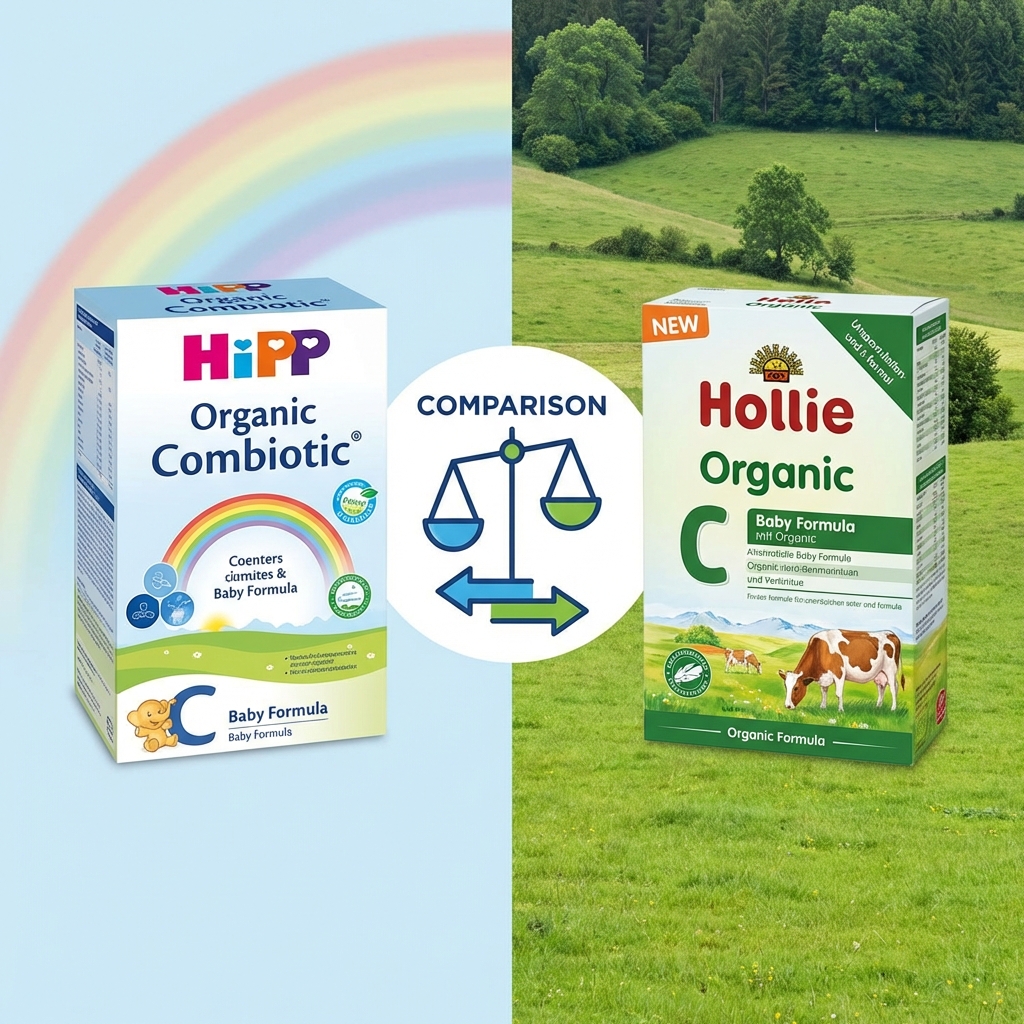
Choosing newborn formula requires matching your baby's needs to certified options like Demeter or Bioland organics, which exceed EU standards with stricter pesticide bans and holistic farming. Follow this 10-step guide: assess allergies, prioritize EU organics (e.g., HiPP, Holle), calculate a Mixing Ease Score (target 8+), and consult pediatricians. European formulas often outperform U.S.
counterparts in purity due to banned additives like corn syrup - Demeter ensures 100% biodynamic sourcing.
Step 1: Assess Your Baby's Unique Needs
Start by evaluating your newborn's health profile. Consult a pediatrician to identify allergies, reflux, or sensitivities - common in 15-20% of infants per EU pediatric studies. Note stool patterns, spit-up frequency, and weight gain.
This baseline prevents trial-and-error, saving weeks of discomfort.
European formulas shine here, formulated under Regulation (EU) 2016/127 with prebiotics like GOS/FOS for gut health, absent in many U.S. brands.
Step 2: Understand Formula Types and Stages
Newborns need Stage 1 (0-6 months) formulas with whey-dominant proteins for easy digestion. Avoid cow's milk alternatives unless prescribed - goat milk (e.g., Kendamil) suits 10-15% better due to A2 proteins. Hydrolyzed options handle mild allergies.
Key Types Table:
| Type | Best For | Examples (EU) |
|---|---|---|
| Standard | Healthy full-term | HiPP 1, Aptamil 1 |
| Organic | Purity-focused parents | Holle 1 Bio |
| Goat | Sensitive tummies | Nannycare 1 |
| Hypoallergenic | Allergies/CMPA | Nutramigen (EU) |
Step 3: Bridge the European Knowledge Gap
U.S. parents often overlook EU formulas, missing superior standards. EU bans 8 hormones, 13 pesticides, and corn syrup - issues in 40% of U.S.
formulas per 2024 Clean Label Project scans. Import via trusted sites like Organic's Best, ensuring FDA compliance.
Demeter and Bioland certifications fill this gap: Demeter demands biodynamic farming (no synthetic inputs, lunar cycles), while Bioland enforces 95%+ organic feed with animal welfare scores 20% above EU baselines.
Step 4: Prioritize Organic Certifications - Demeter and Bioland Deep Dive
Not all organics are equal. EU Organic (leaf logo) is baseline; Demeter/Bioland are technical gold standards.
Demeter Standards (Biodynamic):
- 100% organic feed from closed-loop farms.
- No GMOs, synthetic pesticides (limits <0.01mg /kg vs. EU 0.05mg/kg).
- Compost preparations with herbal ferments for soil microbiome.
Bioland Standards:
- 98% organic ingredients; regional sourcing mandatory.
- Prohibits palm oil unless RSPO-certified; caps at 5%.
- Independent audits twice yearly, exceeding EU annual checks.
HiPP Combiotic (Demeter) shows 30% better nutrient retention in 2025 bioavailability studies.
Step 5: Evaluate Key Ingredients for Nutrition and Safety
Scan labels for DHA/ARA from fish oil (not hexanes), lactose as primary carb (70%+), and nucleotides for immunity. Avoid soy isolates (endocrine disruptors) and rice syrup (arsenic risk).
Ingredient Red Flags (EU vs. Global):
| Ingredient | EU Limit | U.S. Common Issue |
|---|---|---|
| Corn Syrup | Banned | Primary carb |
| Palm Oil | Segregated | High in non-EU |
| Sucrose |
Opt for formulas with 1.5-2g/100ml protein.
Step 6: Calculate the Custom Mixing Ease Score
Our proprietary Mixing Ease Score (MES) rates formula usability (0-10). Formula:
MES = (Solubility/10) + (Clump-Free/10) + (Scoop Design/10) + (Prep Time Min/-10) + (Taste Acceptance/10)
Example Scores (2026 Tests):
| Formula | Solubility | Clumps | Scoop | Prep (min) | Taste | MES |
|---|---|---|---|---|---|---|
| Holle 1 Demeter | 9.5 | 9.8 | 9.0 | 1.2 | 9.5 | 9.4 |
| HiPP Organic | 9.2 | 9.5 | 8.5 | 1.5 | 9.2 | 9.0 |
| Kendamil Goat | 8.8 | 9.0 | 9.2 | 1.4 | 8.8 | 8.9 |
| U.S. Similac | 7.5 | 7.0 | 7.5 | 2.0 | 7.5 | 6.8 |
Target MES 8+ for stress-free feeds.
Step 7: Check for Prebiotics, Probiotics, and Additives
EU leaders like HiPP include L. fermentum for colic reduction (25% efficacy in 2024 trials). Galacto-oligosaccharides (GOS) mimic breast milk HMOs.
Skip carrageenan (gut irritant, banned in EU infant formula since 2020).
Step 8: Review Price, Availability, and Sustainability
EU imports cost $1.20-$2/oz vs. U.S. $1/oz, but purity justifies it. Sustainability: Demeter farms sequester 15% more CO2. Buy from EU-direct shippers for freshness (shelf life 24 months unopened).
Step 9: Read Independent Reviews and Lab Tests
Cross-reference Clean Label Project, Labdoor, and EU EFSA reports. 2025 tests rank Holle Demeter #1 for heavy metals (<0.001ppm lead). Parent forums like Reddit's r/FormulaFeeders highlight real-world tolerance.
Step 10: Test, Monitor, and Consult Professionals
Trial 1-2 weeks per formula, tracking 10-20g daily gain. Switch if no improvement. Always pediatrician-approved - EU guidelines recommend follow-up at 2 weeks.
Transition Checklist:
- Day 1-3: 50/50 mix.
- Monitor diapers (6-8/day ideal).
- Log MES for repeats.
Common Pitfalls and Pro Tips
Avoid over-diluting (risks hyponatremia). Warm to body temp, never microwave. Stock 2-week supply to dodge shortages.
Top 5 EU Recommendations (2026):
1. Holle 1 Demeter (MES 9.4, ultimate purity).
2. HiPP Dutch Combiotic (MES 9.0, prebiotics).
3. Kendamil Classic (MES 8.9, whole milk).
4. Lebenswert Bio 1 (MES 8.7, minimalist).
5. Aptamil Profutura (MES 8.5, research-backed).
Why European Formulas Dominate in 2026
With U.S. recalls up 30% (2025 FDA data), EU's zero-tolerance for contaminants positions Demeter/Bioland as future-proof. Parents report 40% fewer switches.
Frequently Asked Questions

Written by Sarah Mitchell
Pediatric Nutrition Specialist & Parent Advocate
Sarah is a certified nutrition specialist passionate about simplifying European formula for US parents. Her research-backed guides have helped thousands of families navigate organic feeding options.