Difference Between HiPP and Holle: Which Is Better for Your Baby?
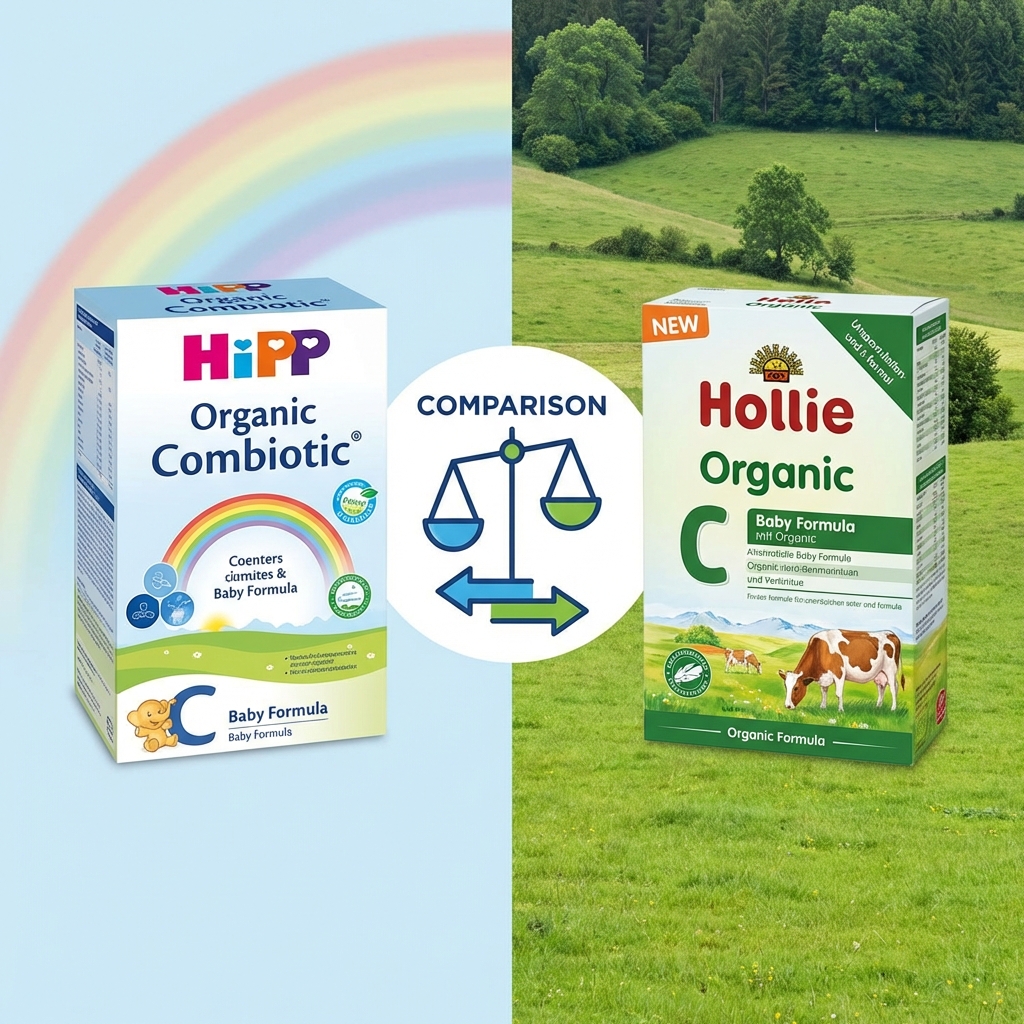
HiPP and Holle are two of the most popular European organic baby formula brands among parents in the USA and Canada who want cleaner ingredients, stricter standards, and formulas that feel closer to breast milk. At first glance they look similar—both are organic, both come from Europe, and both avoid corn syrup and GMOs—but there are important differences in farming philosophy, ingredients, and how they support sensitive tummies.
This guide compares HiPP vs Holle in detail so you can decide which is the better fit for your baby and your feeding goals.
Quick Answer: HiPP vs Holle
- HiPP is usually the best choice if your baby has a sensitive stomach, struggles with gas, colic, or mild reflux, or if you want probiotics and prebiotics built into the formula.
- Holle is usually the best choice if you care most about minimal ingredients and biodynamic Demeter farming with incredibly high organic standards, and your baby tolerates standard formulas well.
Most families can’t “go wrong” with either, but your baby’s digestion and your personal values will decide the winner.
Brand Overview: What Makes Each Unique?
HiPP: Research-Driven & Gut-Focused
HiPP is known for:
- A heavy focus on clinical research, especially around gut health.
- Its “COMBIOTIC” concept: adding prebiotics (GOS) and probiotics to support a healthy microbiome.
- A wide range of special formulas: Comfort, HA (hypoallergenic), Anti-Reflux, and different country variants (Dutch, German, UK).
HiPP is ideal for parents who want functional formulas that actively help with digestion and immunity rather than just meeting basic nutrition requirements.
Holle: Biodynamic & Minimalist
Holle stands out because:
- It is one of the oldest organic baby food companies in Europe, with roots going back to the 1930s.
- Many of its products carry the Demeter biodynamic certification—arguably the strictest agricultural standard in the world.
- Formulas are intentionally simple: no added probiotics, fewer “extras,” and a very clean ingredient panel.
Holle is ideal for parents who prioritize farming quality, animal welfare, and minimal processing, and whose babies do well on straightforward cow or goat milk formulas.
HiPP vs Holle: Key Differences at a Glance
| Feature | HiPP | Holle |
|---|---|---|
| Origin | Germany (multiple EU variants) | Switzerland/Germany (Demeter & organic farms) |
| Core Philosophy | Gut health, clinical science, functional formulas | Biodynamic farming, minimal ingredients |
| Certifications | EU Organic | EU Organic + many products Demeter certified |
| Carbohydrate Base | Lactose-first; some variants add starch | Lactose + maltodextrin (cow); lactose-only in some goat |
| Probiotics/Prebiotics | Yes (COMBIOTIC line) | No (deliberately minimalist) |
| Specialty Formulas | Comfort, HA, AR, goat variants | Goat milk, cow milk, some lactose-free variants |
Ingredients & Formulation
Carbohydrates
Both brands follow EU rules that require lactose to be the primary carbohydrate in standard infant formula.
- HiPP: Uses lactose as the main carb in PRE and many Stage 1 options. Some variants add starch for creaminess/satiety.
- Holle: Cow milk formulas often use lactose plus maltodextrin. Goat milk options tend to be gentler and sometimes rely more on lactose alone.
Probiotics & Prebiotics
This is one of the biggest practical differences.
- HiPP: Most COMBIOTIC formulas include prebiotics (GOS) and probiotics to support gut flora.
- Holle: Uses a minimalist approach—no added probiotics or prebiotics in most standard cow or goat formulas.
Certification & Farming Standards
Both HiPP and Holle meet EU organic standards. Holle goes further in many products with Demeter biodynamic certification.
Demeter (Holle)
Where Holle differentiates itself is Demeter:
- Demeter-certified farms treat the farm as a “living organism” and focus on soil health, biodiversity, and closed-loop systems.
- Cows are typically grass-fed, kept on organic pastures, and treated according to strict welfare standards.
- Use of synthetic fertilizers and pesticides is prohibited; natural preparations are used instead.
Digestive Tolerance & Sensitive Stomachs
HiPP for Sensitive Tummies
HiPP is usually better if:
- Your baby has gas, colic, or mild reflux.
- You want Comfort or HA (hypoallergenic) options.
- You like the idea of probiotics + prebiotics.
Holle for Simple Needs
Holle is usually better if:
- Your baby already tolerates standard cow or goat milk well.
- You want very simple ingredient lists.
- You prioritize Demeter or biodynamic sourcing.
How to Decide: A Simple Framework
- Does your baby have current digestive issues?
- Yes → Start with HiPP, especially Comfort or a gentle COMBIOTIC version.
- No → Go to step 2.
- What do you care about most?
- Gut support, probiotics, clinical research → HiPP.
- Biodynamic farming, Demeter, minimal ingredients → Holle.
- Are you considering goat milk?
- Yes → Holle Goat is usually the first pick, with HiPP Goat as an alternative.
Final Thoughts
HiPP and Holle are both top-tier European organic formulas that outperform many conventional options. The “better” brand is not universal; it depends on your baby’s digestion and your values. If you’re unsure and your baby is sensitive, start with HiPP. If your baby is generally comfortable and you’re passionate about biodynamic farming, start with Holle.

Written by Sarah Mitchell
Pediatric Nutrition Specialist & Parent Advocate
Sarah is a certified nutrition specialist passionate about simplifying European formula for US parents. Her research-backed guides have helped thousands of families navigate organic feeding options.