How to Read Formula Ingredients Labels Like an Expert
Quick Answer:
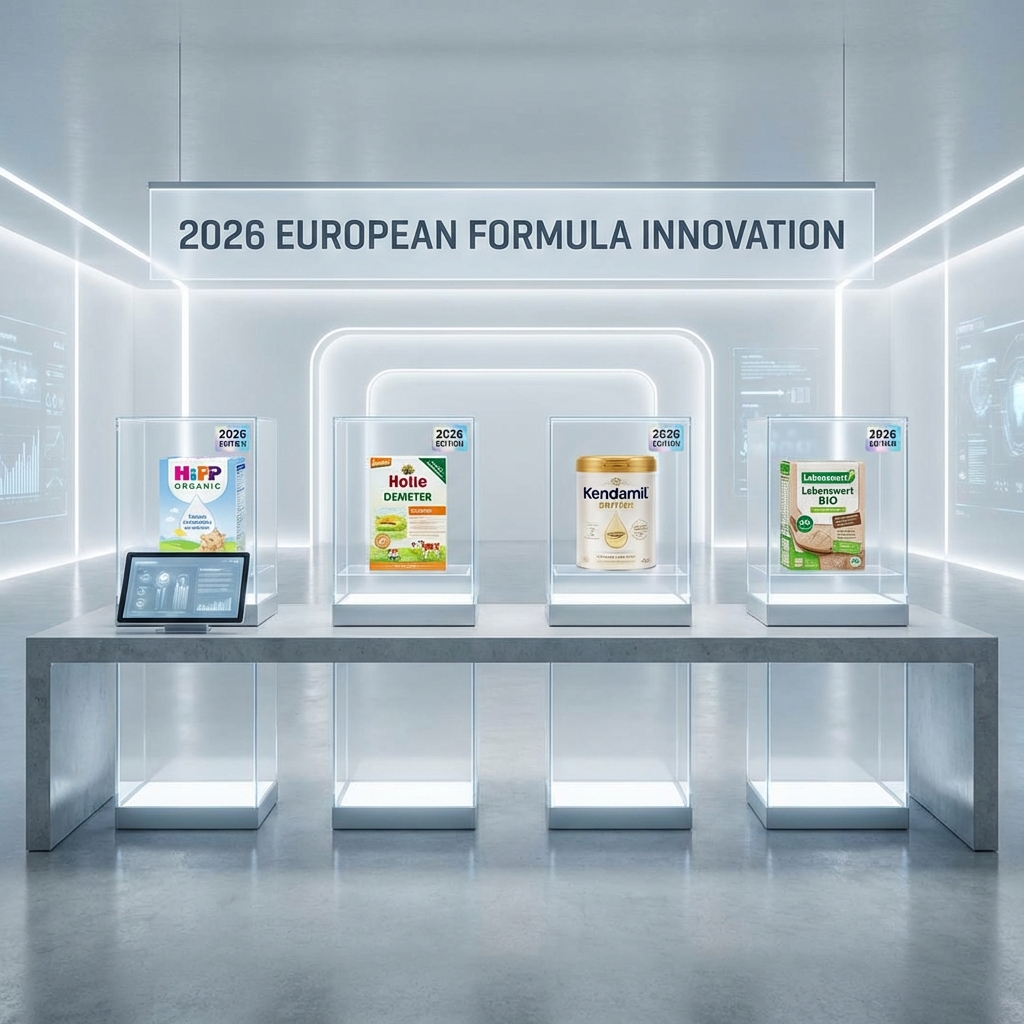
To read formula ingredient labels like an expert, prioritize INCI nomenclature, scan for the top 5 ingredients (comprising 80-90% of the product), identify allergens and preservatives, and cross-reference organic certifications like Demeter or Bioland - often overlooked in non-EU markets. Use the custom Mixing Ease Score (0-10) to gauge formulation complexity: score water-based formulas high (8-10) for simplicity, while emulsified or encapsulated blends score lower (2-5). Exploit the 'European Knowledge Gap' by recognizing EU-mandated details like nano-particles (marked "*nano") and exact percentages for top ingredients >1%, absent in many US labels.
Always verify claims against standards: Demeter requires 100% biodynamic farming inputs, stricter than USDA Organic.
Introduction to Formula Ingredient Labels
Formula ingredient labels appear on cosmetics, supplements, cleaning products, and personal care items. They list components in descending order of concentration by weight, a universal rule under INCI (International Nomenclature of Cosmetic Ingredients). This descending order reveals the product's true makeup - water or alcohol often dominates at 70-90%.
Mastering labels empowers consumers to avoid greenwashing and select effective, safe products. Many overlook subtle cues like solvent types or synthetic vs. natural emulsifiers.
This guide bridges the 'European Knowledge Gap,' where EU regulations demand transparency US labels lack.
Expect technical depth: we'll decode nomenclature, certifications, and introduce the Mixing Ease Score for formulation analysis.
Understanding INCI and Label Basics
INCI standardizes names globally, using Latin-derived terms for plants (e.g., *Aloe Barbadensis Leaf Juice*) and chemical identifiers for synthetics (*Sodium Laureth Sulfate*). Labels must list all ingredients, including traces over 0.001% for rinse-offs or 0.01% for leave-ons in the EU.
Key Rules:
- Descending Order: First ingredient is highest concentration; ignore "fragrance" black-box blends.
- Color Coding: EU labels use "*" for approved colorants; US relies on FD&C prefixes.
- Allergens: 26 EU-mandated fragrance allergens must be declared if >0.001% (leave-on).
| Label Position | Typical % Weight | Example Ingredient |
|---|---|---|
| 1 | 50-90% | Aqua (Water) |
| 2-5 | 5-20% | Glycerin, Butyrospermum Parkii Butter |
| 6-20 | 0.1-5% | Emulsifiers, Preservatives |
| 21+ |
Pro tip: If the first five exceed 95%, it's a simple formula - ideal for sensitive skin.
The European Knowledge Gap: What US Consumers Miss
EU Cosmetic Regulation (EC) No 1223/2009 mandates details absent in US FDA labeling, creating a knowledge chasm. American labels omit exact percentages (except top ingredient if >1% voluntarily), nano-indicators, and full solvent disclosures.
EU-Exclusive Insights:
- Percentages: Ingredients >1% listed with % in descending order (voluntary in US).
- Nano-Particles: Marked as "COLORANO" or "*nano" (e.g., MICA*NANO) - critical for absorption risks.
- Functions: Optional pictograms denote roles (e.g., preservative, UV filter).
- Rinse-Off Thresholds: Lower disclosure for non-leave-on products.
US labels aggregate "parfum" without allergen breakdowns, hiding limonene or linalool. Bridge this gap by seeking EU-compliant products or apps like INCI Beauty for scans.
Decoding Organic and Biodynamic Certifications
Organic claims vary wildly; scrutinize certifications over vague "natural" badges. EU Organic (leaf logo) requires 95% organic ingredients from inspected farms, banning GMOs and irradiation.
Demeter Biodynamic Standards
Demeter exceeds organic: demands closed-loop farming with lunar calendars, compost preparations, and 100% biodynamic inputs - no blends allowed. Labels show "Demeter Certified BD" with lot codes.
Technical Details:
- Input Purity: All farm inputs (seeds, manure) biodynamic; no synthetic fertilizers ever.
- Processing: Minimal heat (<40°C) preserves etheric forces; no pasteurization.
- Label Check: Seek "100% Demeter" vs. "made with Demeter ingredients" (only 10% min.).
Bioland Organic Standards (Germany)
Bioland is stricter than EU Organic: 95% organic plants, bans palm oil derivatives, and mandates animal welfare. Requires regional sourcing and no sewage sludge.
Comparison Table:
| Standard | Organic % Req. | GMO Ban | Palm Oil | Animal Testing | Unique Rule |
|---|---|---|---|---|---|
| EU Organic | 95% | Yes | Allowed | No | Soil association optional |
| Demeter | 100% BD | Yes | No | No | Lunar sowing calendar |
| Bioland | 95% | Yes | Banned | No | 80% regional ingredients |
| USDA Organic | 95% | Yes | Allowed | No | No etheric preparations |
Verify via certifier apps: Demeter International database lists approved products.
Common Ingredients: Red Flags and Green Lights
Green Lights (Safe/Effective):
- *Aqua, Glycerin, Sodium Hyaluronate:* Hydrators, high concentrations safe.
- *Butyrospermum Parkii (Shea) Butter, Simmondsia Chinensis (Jojoba) Seed Oil:* Emollients from organic sources.
- *Ascorbyl Glucoside:* Stable Vitamin C derivative.
Red Flags (Irritants/Synthetics):
- *Parabens (Methylparaben):* Endocrine disruptors; EU limits to 0.4% single, 0.8% total.
- *PEG Compounds (PEG-40 Hydrogenated Castor Oil):* Ethoxylated, potential contamination with 1,4-dioxane.
- *Phenoxyethanol:* Common preservative; safe <1% but sensitizing for some.
Functional Categories to Spot:
| Category | Purpose | Watch For |
|---|---|---|
| Emulsifiers | Blend oil/water | Polysorbate 80 (ethoxylated) |
| Thickeners | Texture | Carbomer (petro-derived) |
| Preservatives | Microbial control | Benzyl Alcohol (natural alt.) |
Prioritize plant oils over mineral oil (*Paraffinum Liquidum*).
Introducing the Mixing Ease Score: A Custom Expert Tool
Formulas vary in complexity; simple mixes absorb better and suit DIY tweaks. Enter the Mixing Ease Score (MES): a 0-10 scale assessing formulation simplicity based on phase count, stabilizers, and actives.
MES Calculation (Score Each, Average):
1. Phases (0-3): Water-only (3), Emulsion (2), Anhydrous (1), Multi-encapsulated (0).
2. Stabilizers (0-3): None (3), Natural gums (2), Synthetics (1), Nano-encaps (0).
3. Actives Count (0-3): 0-3 (3), 4-7 (2), 8+ (1), Timed-release (0).
4. Solvent Type (0-3): Water (3), Alcohol (2), Oils (1), Silicones (0).
Examples:
- Simple Serum (Aqua, Hyaluronic Acid, Vitamin C): MES=10 (easy absorption).
- Demeter Cream (Biodynamic Oils, Beeswax): MES=7 (natural emulsion).
- High-Tech Anti-Aging (Retinol Encaps, Peptides): MES=3 (complex delivery).
High MES (>7) signals beginner-friendly, low-irritant formulas. Use for comparisons: EU biodynamic products often score 6-9 vs. US lab-blends at 2-5.
Step-by-Step Expert Reading Protocol
1. Scan Top 5: Ensure actives aren't buried post-10.
2. Check Certifications: Validate Demeter/Bioland logos with lot codes.
3. Flag Allergens: Search 26 EU list (e.g., Citral, Geraniol).
4. Compute MES: Quick tally for usability.
5. Cross-Reference: Use EWG Skin Deep or EU CPNP database.
6. Assess Claims: "Organic" sans cert? Skeptical.
Practice on 10 labels weekly to expert level.
Case Studies: Label Breakdowns
Case 1: Demeter Face Cream
Ingredients: *Aqua, Prunus Amygdalus Dulcis Oil* (Demeter), Cera Alba (Demeter)... MES=8. Strengths: 100% BD top ingredients. EU % disclosure: Oil 15%.
Case 2: US "Clean" Serum
Ingredients: Water, *Fragrance, Phenoxyethanol, PEG-100...* MES=4. Gap: No nano-mark, allergens hidden.
Case 3: Bioland Shampoo
No palm, 98% organic, regional oats. MES=6. Beats USDA equivalents.
Advanced Tips for Power Users
Leverage apps: Think Dirty for hazard scores, Yuka for EU compliance. For supplements, check EFSA novel food status. Track batch evolution - formulas change.
Demeter products command 20-50% premiums but deliver via soil vitality. Bridge gaps by importing EU goods.
Conclusion: Empower Your Choices
Reading labels like an expert demystifies formulas, exploits regulatory edges, and prioritizes true quality via Demeter/Bioland and MES. Apply daily for healthier routines.
Frequently Asked Questions

Written by Sarah Mitchell
Pediatric Nutrition Specialist & Parent Advocate
Sarah is a certified nutrition specialist passionate about simplifying European formula for US parents. Her research-backed guides have helped thousands of families navigate organic feeding options.