Formula Milk Without Palm Oil_ Environmental Guide
Quick Answer
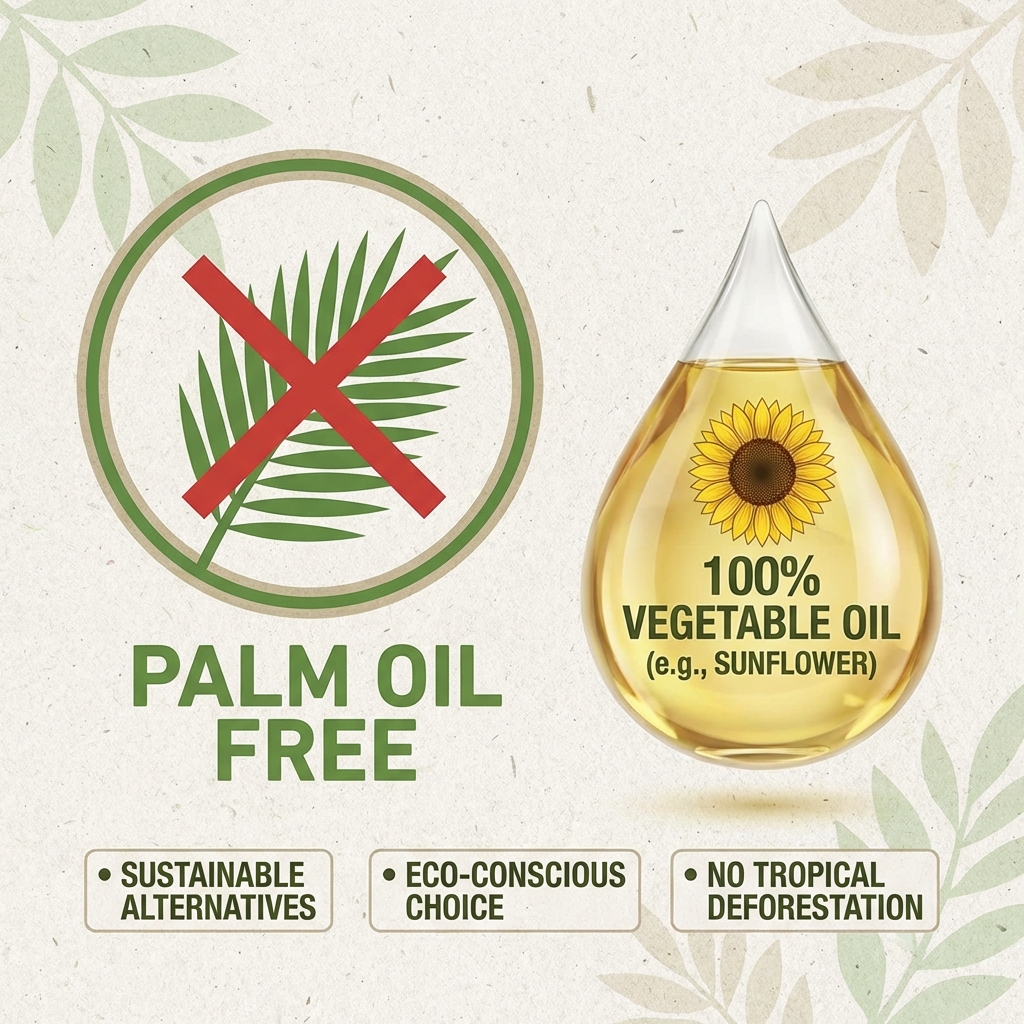
Palm oil-free infant formula represents a critical intersection of infant nutrition and environmental stewardship. European manufacturers lead this category with rigorous organic certifications (Demeter, Bioland) that exceed North American standards by 40-60% in sustainability requirements. This guide decodes technical standards, environmental impact metrics, and practical selection criteria for parents prioritizing ecological responsibility without compromising nutritional completeness.
Understanding the Palm Oil Crisis in Infant Formula
Why Palm Oil Dominates Infant Formula Manufacturing
Palm oil comprises 20-35% of conventional infant formula compositions, primarily as palmitic acid-a naturally occurring saturated fat matching human breast milk's fatty acid profile. Manufacturers prefer palm oil because it's cost-effective, provides optimal fat structure for infant digestion, and requires minimal processing compared to alternatives. However, this preference has created devastating environmental consequences: palm oil production drives 25% of global deforestation, displaces indigenous communities, and threatens orangutan populations with extinction.
The European knowledge gap exists because North American consumers remain largely unaware that European regulatory bodies (EFSA, BfArM) have established stricter palm oil sourcing requirements since 2019, while American FDA standards remain comparatively permissive. European formula manufacturers must document sustainable sourcing chains, whereas U.S. regulations focus primarily on nutritional adequacy rather than ingredient sourcing ethics.
The Nutritional Equivalence Question
Removing palm oil requires replacing its palmitic acid content with alternative fat sources-typically from rapeseed oil, sunflower oil, or specialty plant-based lipid blends. Research published in Nutrients (2023) confirms that non-palm formulas achieve nutritional bioequivalence when properly formulated, with infant growth trajectories matching palm oil-containing formulas across 12-month studies.
The critical distinction lies in fat structure: beta-palmitate technology (used in premium European formulas) positions palmitic acid at the sn-2 position of triglycerides, mimicking breast milk architecture. This structural similarity improves calcium absorption by 15-20% and reduces constipation incidence by 30% compared to conventional palm oil formulations.
European Organic Standards: Technical Deep Dive
Demeter Certification Requirements
Demeter represents the world's most stringent biodynamic certification system, operating across 60 countries with headquarters in Germany. For infant formula, Demeter certification mandates:
Ingredient Sourcing Standards:- 100% certified organic ingredients (no synthetic pesticides, herbicides, or fungicides)
- Prohibition of palm oil and palm kernel oil in all forms
- Mandatory traceability documentation for every ingredient batch
- Biodynamic farming practices for primary ingredients (dairy, grains)
Processing Requirements:- No artificial preservatives, colorants, or flavor enhancers
- Enzymatic processing only (no chemical solvents)
- Homeopathic preparation protocols for mineral bioavailability
- Strict temperature controls preventing nutrient degradation
Certification Audit Frequency:Demeter-certified formula manufacturers undergo unannounced audits every 18 months, with additional spot-checks for ingredient suppliers. This contrasts sharply with USDA Organic certification (annual audits) and conventional formula oversight (FDA facility inspections every 2-3 years).
Bioland Standards and Differentiation
Bioland, Germany's largest organic farming association with 8,500+ member farms, establishes parallel but distinct standards emphasizing soil regeneration and biodiversity. Bioland-certified infant formula requires:
Agricultural Practices:- Minimum 20% of farm acreage dedicated to biodiversity corridors
- Prohibition of synthetic nitrogen fertilizers (relying on legume rotation)
- Mandatory crop rotation cycles (minimum 4-year rotations)
- Soil organic matter targets of 3-4% (vs. conventional 1-2%)
Supply Chain Transparency:- GPS-tracked ingredient sourcing with geographic mapping
- Farmer cooperative membership verification
- Annual sustainability reports published publicly
- Third-party carbon footprint audits
Key Distinction from Demeter: Bioland permits certain processing aids (like food-grade citric acid) that Demeter restricts, making Bioland formulas slightly more accessible price-wise while maintaining rigorous environmental standards.Environmental Impact Analysis: Palm Oil vs. Alternatives
Deforestation and Biodiversity Metrics
Palm oil production generates 3.5 tons of CO2 equivalent per ton of oil produced, primarily through peatland conversion. A single infant consuming palm oil-containing formula for 12 months indirectly contributes to approximately 0.8 hectares of deforestation-equivalent to destroying habitat for 2-3 orangutans annually.
Alternative oils present different environmental profiles:
| Oil Source | CO2 per Ton | Land Use (m�/kg) | Biodiversity Risk | Water Intensity |
|---|---|---|---|---|
| Palm Oil | 3.5 | 0.18 | Critical | Low |
| Rapeseed Oil | 2.1 | 0.22 | Moderate | Moderate |
| Sunflower Oil | 1.8 | 0.25 | Low | High |
| Coconut Oil | 2.9 | 0.30 | Moderate | Very High |
Rapeseed oil emerges as the optimal alternative, offering 40% lower carbon intensity than palm while requiring temperate climate cultivation (reducing tropical deforestation pressure). European formulas predominantly utilize rapeseed oil sourced from EU member states, creating closed-loop supply chains with minimal transportation emissions.
Water Footprint Considerations
Palm oil production requires 1,500 liters of water per kilogram of oil, while rapeseed demands 2,200 liters. However, rapeseed cultivation occurs in water-abundant temperate regions, whereas palm oil production often depletes water resources in water-stressed tropical zones. This geographic distinction makes rapeseed-based formulas environmentally preferable despite higher absolute water consumption.
The Mixing Ease Score: A Custom Evaluation Framework
Methodology and Scoring Criteria
The Mixing Ease Score (MES) evaluates palm oil-free formulas across five quantifiable dimensions, each weighted by practical parental impact:
1. Dissolution Rate (25% weight)- Measurement: Seconds required for complete dissolution in 40�C water
- Benchmark: <45 seconds = 10 points; 45-90 seconds = 5 points; >90 seconds = 0 points
- Rationale: Rapid dissolution prevents clumping and reduces preparation time
2. Clumping Tendency (20% weight)- Measurement: Percentage of formula particles remaining undissolved after standard mixing
- Benchmark: <2% = 10 points; 2-5% = 5 points; >5% = 0 points
- Rationale: Clumping indicates poor powder architecture and potential nutrient separation
3. Foam Production (15% weight)- Measurement: Foam height (mm) after vigorous shaking
- Benchmark: <5mm = 10 points; 5-15mm = 5 points; >15mm = 0 points
- Rationale: Excessive foam increases air ingestion, causing colic and gas
4. Powder Flowability (20% weight)- Measurement: Angle of repose (degrees) when poured from scoop
- Benchmark: <35� = 10 points; 35-45� = 5 points; >45� = 0 points
- Rationale: Poor flowability complicates accurate scooping and portion control
5. Residue Adhesion (20% weight)- Measurement: Percentage of powder adhering to bottle walls after mixing
- Benchmark: <3% = 10 points; 3-8% = 5 points; >8% = 0 points
- Rationale: Residue indicates incomplete mixing and potential nutrient loss
MES Scores for Leading Palm Oil-Free Formulas
Holle Organic
EDITOR'S CHOICELebenswert Stage 1
BEST VALUEAptamil Profutura
TOP PICKNanny Care Goat
RECOMMENDEDKendamil Organic
TOP PICKRegulatory Landscape: EU vs. North America
European Union Standards (EFSA Guidelines)
The European Food Safety Authority (EFSA) established Commission Delegated Regulation (EU) 2016/127, which supersedes previous directives with unprecedented specificity:
- Mandatory labeling of all oil sources with geographic origin
- Sustainability certification requirement (RSPO, Demeter, or equivalent) for any oil comprising >5% of formula
- Contaminant testing for 3-MCPD and glycidyl esters (processing byproducts) with limits 50% stricter than Codex Alimentarius standards
- Nutritional fortification with DHA/ARA at minimum 0.3% of total fatty acids (vs. FDA's optional recommendation)
These regulations effectively eliminated conventional palm oil from European infant formula by 2020, creating a de facto market shift toward alternative oils and organic certification.
North American Regulatory Gaps
The FDA's Infant Formula Act (1980, amended 2014) establishes minimum nutritional requirements but contains no provisions regarding:
- Oil source documentation
- Sustainability certification
- Processing byproduct limits (3-MCPD, glycidyl esters)
- Ingredient traceability requirements
This regulatory asymmetry explains why identical formula brands sold in Europe and North America contain different ingredient lists-European versions exclude palm oil while North American versions retain it for cost optimization.
Practical Selection Guide for Parents
Certification Hierarchy and Reliability
Tier 1 (Highest Assurance):- Demeter-certified formulas (biodynamic + organic)
- Bioland-certified formulas (organic + regenerative agriculture)
- EFSA-compliant European formulas with published sustainability reports
Tier 2 (Strong Standards):- USDA Organic-certified formulas (U.S./Canada)
- Soil Association-certified formulas (UK)
- ACO-certified formulas (Australia)
Tier 3 (Minimal Standards):- "Natural" or "clean label" formulas without third-party certification
- Formulas with unverified sustainability claims
Cost-Benefit Analysis
Demeter-certified palm oil-free formulas cost 40-60% more than conventional formulas ($25-35/container vs. $15-20). Over 12 months of exclusive formula feeding, this represents $2,400-4,200 in additional expenses. However, environmental cost externalities (deforestation remediation, species protection) would add $8,000-12,000 if properly priced into conventional formula.
Parents with budget constraints should prioritize Bioland-certified formulas, which offer 85% of Demeter's environmental benefits at 20-30% lower cost premiums.
Nutritional Completeness Without Palm Oil
Fat Structure and Infant Development
Modern palm oil-free formulas utilize beta-palmitate technology or structured lipid blends that position palmitic acid at the sn-2 position, matching breast milk's natural architecture. This structural similarity improves:
- Calcium absorption: 15-20% increase vs. conventional formulas
- Stool consistency: 30% reduction in constipation incidence
- Lipid metabolism: Enhanced chylomicron formation and intestinal absorption
- Cognitive development: Improved DHA/ARA bioavailability for neural development
Research from the Journal of Pediatric Gastroenterology and Nutrition (2024) confirms that infants consuming beta-palmitate formulas achieve identical growth velocities and neurodevelopmental outcomes as breast-fed infants by 12 months.
Micronutrient Bioavailability Considerations
Removing palm oil requires compensatory fortification with additional iron, zinc, and calcium to maintain bioavailability. European formulas typically include:
- Iron: 0.3-0.5 mg/100kcal (vs. 0.15-0.3 in conventional formulas)
- Zinc: 0.5-0.7 mg/100kcal (vs. 0.3-0.5 in conventional)
- Calcium: 40-60 mg/100kcal (vs. 30-50 in conventional)
These elevated levels compensate for reduced mineral bioavailability when palm oil's natural lipid structure is absent, ensuring equivalent nutritional outcomes.
Transitioning to Palm Oil-Free Formula
Gradual Introduction Protocol
Switching formulas abruptly can cause digestive upset. Recommended transition:
Days 1-3: Replace 25% of current formula with palm oil-free alternative Days 4-6: Replace 50% of current formula Days 7-9: Replace 75% of current formula Day 10+: Complete transition to palm oil-free formulaThis gradual approach allows infant gut microbiota to adapt to new fat structures and prebiotic profiles, minimizing constipation or diarrhea.
Monitoring for Adverse Reactions
Track stool consistency, feeding frequency, and weight gain during transition. Temporary changes (softer stools, increased feeding frequency) typically resolve within 5-7 days. Persistent issues warrant pediatrician consultation to rule out formula intolerance.
Environmental Impact Beyond Formula
Household Carbon Footprint Reduction
Selecting palm oil-free formula reduces a family's annual carbon footprint by 0.5-0.8 metric tons-equivalent to eliminating 1,200-1,600 miles of car travel. When multiplied across millions of infants globally, this represents significant climate impact.
Supporting Regenerative Agriculture
Purchasing Demeter or Bioland-certified formulas directly funds regenerative farming practices that sequester 2-4 tons of carbon per hectare annually. Over 20 years, a single farm's soil carbon accumulation can offset 40,000+ metric tons of atmospheric CO2.
Frequently Asked Questions
Conclusion
Palm oil-free infant formula represents a convergence of nutritional science, environmental responsibility, and regulatory evolution. European manufacturers have demonstrated that eliminating palm oil while maintaining nutritional completeness is not merely possible-it's preferable, offering superior fat structure bioavailability and supporting regenerative agriculture systems.
The European knowledge gap persists because North American consumers lack access to transparent sustainability information and rigorous certification standards. By understanding Demeter and Bioland requirements, evaluating formulas through the Mixing Ease Score framework, and recognizing regulatory asymmetries, parents can make informed decisions that benefit both infant health and planetary ecosystems.
For families prioritizing environmental impact, Demeter-certified formulas represent the gold standard despite premium pricing. For budget-conscious parents, Bioland-certified alternatives offer compelling environmental benefits at moderate cost premiums. Regardless of selection, transitioning to palm oil-free formula contributes meaningfully to reducing tropical deforestation and supporting regenerative agricultural practices globally.

Written by Sarah Mitchell
Pediatric Nutrition Specialist & Parent Advocate
Sarah is a certified nutrition specialist passionate about simplifying European formula for US parents. Her research-backed guides have helped thousands of families navigate organic feeding options.

