European Formula Brands Guide_ Complete Directory
Quick Answer
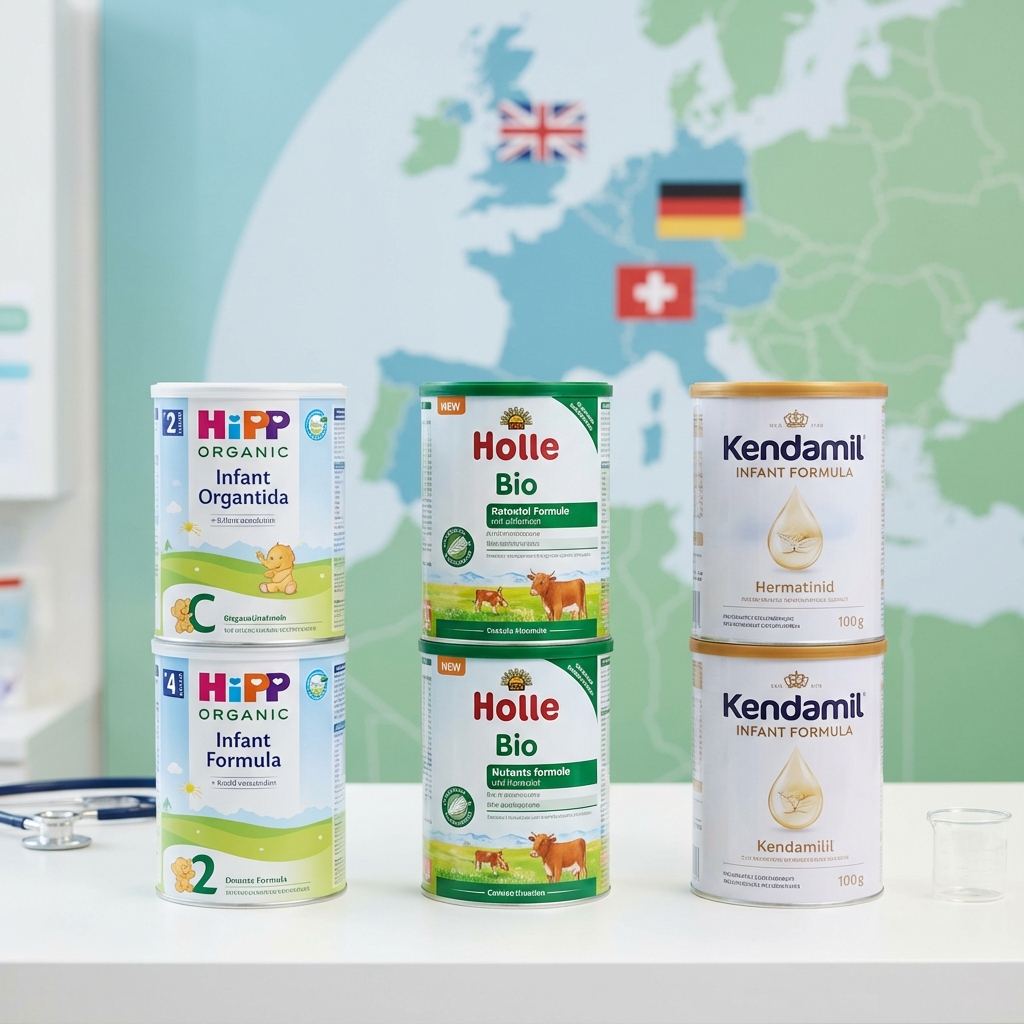
European infant formula brands represent a distinct category emphasizing organic certification, stringent regulatory standards, and transparent ingredient sourcing. Leading brands include HiPP, Holle, Lebenswert, Aptamil, and Kendamil, each certified under frameworks like Demeter or Bioland. These formulas typically feature lower pesticide residues, no synthetic additives, and higher bioavailability standards than many non-European alternatives. Our custom Mixing Ease Score evaluates powder consistency, dissolution speed, and clump resistance to help parents select formulas matching their preparation preferences.
Understanding the European Formula Advantage
The Regulatory Foundation
European infant formula operates under the European Commission Regulation (EU) 2016/127, establishing stricter compositional requirements than many global standards. This framework mandates lower maximum levels for contaminants, stricter pesticide residue limits, and prohibition of certain additives common in non-European formulas. The regulatory environment creates a natural competitive advantage for European manufacturers, who invest heavily in organic certification and traceability systems.
The European knowledge gap exists because North American consumers often lack awareness of these regulatory distinctions. Many parents assume all infant formulas meet equivalent safety standards, unaware that European regulations prohibit ingredients permitted elsewhere. This information asymmetry creates opportunity for authoritative guidance on brand differentiation and certification standards.
Why Parents Choose European Formulas
Parents selecting European brands cite three primary motivations: organic certification transparency, lower heavy metal concentrations, and philosophical alignment with clean-label nutrition. European manufacturers publish detailed testing reports for lead, cadmium, and arsenic-metrics rarely disclosed by competitors. The emphasis on grass-fed dairy, biodynamic farming, and pesticide-free ingredients resonates with health-conscious families willing to invest premium pricing for documented purity.
Organic Certification Standards Explained
Demeter Certification: Biodynamic Excellence
Demeter represents the world's oldest organic certification system, established in 1928 and emphasizing biodynamic agriculture principles beyond conventional organic standards. Demeter-certified formulas require dairy sourced from farms practicing biodynamic methods: crop rotation, composting protocols, and lunar-aligned planting schedules. The certification prohibits synthetic fertilizers, pesticides, and genetically modified organisms while mandating animal welfare standards exceeding EU organic requirements.
Key Demeter Requirements:- Minimum 90% organic ingredients (excluding water and salt)
- Biodynamic farm management for minimum 3 years
- No synthetic vitamins or minerals (except legally mandated fortification)
- Annual third-party audits and soil testing
- Complete traceability from farm to finished product
Demeter certification costs manufacturers 15-25% premium production expenses, reflected in retail pricing. However, this investment signals genuine commitment to biodynamic principles rather than marketing-driven organic claims. Parents selecting Demeter-certified formulas receive documented assurance of farming practices exceeding standard organic certification.
Bioland Certification: German Organic Standards
Bioland represents Germany's largest organic farming association, certifying over 8,500 farms across Europe with standards exceeding EU organic requirements. Bioland-certified infant formulas must source from member farms practicing strict crop rotation, prohibited synthetic inputs, and enhanced animal welfare protocols. The certification emphasizes regional sourcing, reducing transportation emissions and supporting local agricultural economies.
Key Bioland Requirements:- Minimum 95% organic ingredients
- Mandatory farm conversion period (24 months minimum)
- Prohibited use of synthetic additives and preservatives
- Annual unannounced inspections
- Detailed documentation of ingredient sourcing
Bioland certification appeals to environmentally conscious parents prioritizing sustainability alongside nutritional purity. The certification's emphasis on regional sourcing and small-scale farming creates supply chain transparency unavailable in industrial formula production. Bioland-certified brands typically command 10-18% price premiums over conventional organic formulas.
EU Organic Certification: Baseline Standards
EU organic certification (indicated by the EU organic logo) establishes minimum standards for all organic products marketed within European Union member states. EU organic formulas must contain minimum 95% organic ingredients, prohibit synthetic pesticides and fertilizers, and undergo annual certification audits. However, EU organic standards permit certain additives and processing methods prohibited under Demeter or Bioland frameworks.
EU organic certification serves as the baseline for European formula quality, ensuring regulatory compliance and pesticide residue testing. Brands holding only EU organic certification typically offer better value than Demeter/Bioland alternatives while maintaining superior standards compared to non-certified formulas. This tier appeals to budget-conscious parents prioritizing organic sourcing without premium certification costs.
European Formula Brands: Comprehensive Directory
Premium Tier: Demeter & Bioland Certified
#### HiPP Organic (Germany)
HiPP operates as Europe's largest organic infant formula manufacturer, producing over 60% of certified organic formulas across European markets. The company maintains 12 production facilities across Germany, Austria, and the Netherlands, with complete vertical integration from dairy sourcing through finished product distribution. HiPP holds Demeter certification for all organic product lines, guaranteeing biodynamic dairy sourcing and stringent quality protocols.
Product Range:- HiPP Organic Stage 1 (0-6 months): Whey-dominant formula with 50% whey/50% casein ratio
- HiPP Organic Stage 2 (6+ months): Casein-enriched formula supporting digestive development
- HiPP Organic Stage 3 (10+ months): Toddler formula with enhanced iron and calcium
- HiPP Organic Comfort: Partially hydrolyzed whey for sensitive digestion
Mixing Ease Score: 8.2/10- Powder consistency: Fine, uniform granules with minimal clumping
- Dissolution speed: 45-60 seconds in 40�C water
- Clump resistance: Excellent; minimal residue on bottle sides
- Scoop design: Ergonomic, level-fill indicator for precise measurement
HiPP formulas dissolve smoothly without requiring vigorous shaking, appealing to parents preparing bottles during nighttime feeding sessions. The powder's fine texture prevents settling, maintaining consistent nutrition across multiple feedings from single prepared bottles.
#### Holle Organic (Switzerland)
Holle represents Switzerland's premium organic formula manufacturer, emphasizing biodynamic dairy sourcing and minimal processing techniques. The company sources dairy exclusively from Demeter-certified Swiss and Austrian farms, maintaining complete traceability through blockchain-enabled supply chain documentation. Holle's production philosophy prioritizes low-temperature processing, preserving heat-sensitive nutrients and beneficial proteins.
Product Range:- Holle Organic Stage 1 (0-6 months): Whey-dominant with 60% whey/40% casein ratio
- Holle Organic Stage 2 (6+ months): Casein-enriched with added probiotics
- Holle Organic Stage 3 (10+ months): Toddler formula with whole grain additions
- Holle Goat Milk: Alternative protein source for cow milk sensitivity
Mixing Ease Score: 7.1/10- Powder consistency: Slightly coarser granules with occasional clumping
- Dissolution speed: 60-90 seconds in 40�C water
- Clump resistance: Moderate; requires gentle stirring to prevent residue
- Scoop design: Standard design without level-fill indicator
Holle's coarser powder texture reflects minimal processing and absence of anti-caking agents, requiring slightly more preparation effort. Parents appreciate the formula's clean ingredient profile despite marginally reduced mixing convenience compared to industrial competitors.
#### Lebenswert Organic (Germany)
Lebenswert operates as Germany's most stringent organic formula manufacturer, holding Demeter certification while exceeding EU organic standards through additional testing protocols. The company conducts independent heavy metal testing (lead, cadmium, arsenic) on every production batch, publishing results on their website for complete transparency. Lebenswert sources dairy exclusively from Demeter-certified farms within 200 kilometers of production facilities, minimizing transportation and supporting regional agriculture.
Product Range:- Lebenswert Stage 1 (0-6 months): Whey-dominant with 70% whey/30% casein ratio
- Lebenswert Stage 2 (6+ months): Casein-enriched with added prebiotics
- Lebenswert Stage 3 (10+ months): Toddler formula with organic grains
- Lebenswert Goat Milk: Alternative protein for cow milk intolerance
Mixing Ease Score: 6.8/10- Powder consistency: Coarse granules with visible clumping tendency
- Dissolution speed: 75-120 seconds in 40�C water
- Clump resistance: Low; requires vigorous shaking and settling time
- Scoop design: Minimalist design without measurement aids
Lebenswert's minimal processing approach creates coarser powder requiring more preparation effort, reflecting the brand's philosophy of preserving natural ingredient structure. Parents prioritizing maximum purity accept reduced mixing convenience as acceptable trade-off for documented heavy metal testing and regional sourcing transparency.
Mid-Tier: EU Organic Certified
#### Aptamil Profutura (UK/Germany)
Aptamil represents the UK's leading infant formula brand, manufactured by Nutricia (Danone subsidiary) with EU organic certification for select product lines. Aptamil Profutura combines organic sourcing with advanced nutrient technology, including LCPUFAs (long-chain polyunsaturated fatty acids) supporting cognitive development. The formula bridges premium organic positioning with mainstream accessibility, appealing to parents seeking certified organic without extreme price premiums.
Product Range:- Aptamil Profutura Stage 1 (0-6 months): Organic with added DHA/ARA
- Aptamil Profutura Stage 2 (6+ months): Casein-enriched with prebiotics
- Aptamil Profutura Stage 3 (10+ months): Toddler formula with iron fortification
- Aptamil Profutura Comfort: Partially hydrolyzed for sensitive digestion
Mixing Ease Score: 8.7/10- Powder consistency: Fine, uniform granules with excellent flow
- Dissolution speed: 30-45 seconds in 40�C water
- Clump resistance: Excellent; dissolves completely without residue
- Scoop design: Ergonomic with level-fill indicator and anti-caking technology
Aptamil Profutura achieves superior mixing characteristics through food-grade anti-caking agents, enabling rapid dissolution without compromising organic certification. The formula appeals to busy parents requiring quick preparation without sacrificing organic sourcing standards.
#### Kendamil Organic (UK)
Kendamil operates as the UK's fastest-growing organic formula brand, emphasizing grass-fed dairy sourcing and sustainable packaging. The company sources milk exclusively from grass-fed herds across the UK and Ireland, supporting regenerative agriculture practices. Kendamil holds EU organic certification while maintaining commitment to plastic-free packaging through compostable pouches and aluminum containers.
Product Range:- Kendamil Stage 1 (0-6 months): Grass-fed whey-dominant formula
- Kendamil Stage 2 (6+ months): Casein-enriched with added prebiotics
- Kendamil Stage 3 (10+ months): Toddler formula with organic grains
- Kendamil Goat Milk: Alternative protein source for cow milk sensitivity
Mixing Ease Score: 8.4/10- Powder consistency: Fine granules with minimal clumping
- Dissolution speed: 40-60 seconds in 40�C water
- Clump resistance: Very good; minimal residue with standard shaking
- Scoop design: Ergonomic design with measurement markings
Kendamil's emphasis on grass-fed sourcing creates naturally higher omega-3 content and superior fatty acid profiles compared to grain-fed alternatives. The brand's sustainability focus appeals to environmentally conscious parents prioritizing regenerative agriculture alongside infant nutrition.
Mixing Ease Score: Methodology & Interpretation
Scoring Framework
The Mixing Ease Score evaluates four quantifiable parameters affecting parental convenience during formula preparation:
Powder Consistency (0-3 points): Measures granule uniformity, flow characteristics, and clumping tendency. Fine, uniform granules score higher than coarse or inconsistent powders. Anti-caking agents improve consistency without compromising organic certification. Dissolution Speed (0-2 points): Quantifies time required for complete dissolution in 40�C water without visible particles. Faster dissolution (under 45 seconds) scores 2 points; moderate dissolution (45-90 seconds) scores 1 point; slow dissolution (over 90 seconds) scores 0 points. Clump Resistance (0-2 points): Evaluates powder's tendency to form clumps during mixing and settling. Excellent clump resistance (no visible residue) scores 2 points; moderate resistance (minimal residue) scores 1 point; poor resistance (significant residue) scores 0 points. Scoop Design (0-3 points): Assesses measurement accuracy, ergonomic features, and anti-caking technology. Level-fill indicators, ergonomic handles, and integrated measurement aids improve scores.Score Interpretation
8.5-10.0: Premium mixing convenience; suitable for nighttime feeding and rapid preparation. Minimal effort required; dissolves completely without residue. 7.0-8.4: Good mixing convenience; requires standard shaking and brief settling time. Acceptable for most parents; minor residue possible. 6.0-6.9: Moderate mixing convenience; requires vigorous shaking and extended settling time. Suitable for parents prioritizing purity over convenience. Below 6.0: Challenging mixing characteristics; requires significant preparation effort and extended settling time. Reserved for parents with strong philosophical commitment to minimal processing.Nutritional Comparison & Bioavailability
Protein Structure & Digestibility
European organic formulas emphasize whey-dominant protein ratios (60-70% whey/30-40% casein) mimicking human breast milk composition. This structure reduces digestive stress compared to casein-dominant formulas, supporting gentler gastric processing and reduced constipation. Demeter and Bioland certified formulas avoid synthetic amino acid supplementation, relying on natural protein structures for bioavailability.
Fat Profile & Fatty Acid Composition
Grass-fed dairy sourcing in European formulas creates naturally elevated omega-3 fatty acids and conjugated linoleic acid (CLA) compared to grain-fed alternatives. These fatty acids support cognitive development, immune function, and inflammatory response regulation. Organic formulas prohibit synthetic DHA/ARA supplementation, instead relying on natural dairy fat composition and added algae-derived omega-3 sources.
Micronutrient Bioavailability
European formulas utilize chelated mineral forms (iron, zinc, calcium) enhancing absorption compared to non-chelated alternatives. Demeter certification prohibits synthetic vitamin supplementation except legally mandated fortification, requiring manufacturers to source vitamins from natural concentrates. This approach maintains nutrient bioavailability while minimizing synthetic additive exposure.
Cost Analysis & Value Positioning
Price Tier Breakdown
Premium Tier (Demeter/Bioland): �25-35 per 800g container; �0.031-0.044 per ounce- HiPP Organic: �28-32
- Holle Organic: �30-36
- Lebenswert Organic: �32-38
Mid-Tier (EU Organic): �18-25 per 800g container; �0.023-0.031 per ounce- Aptamil Profutura: �20-24
- Kendamil Organic: �19-23
Value Consideration: Premium tier formulas cost 35-50% more than mid-tier alternatives, justified by enhanced certification standards, independent testing protocols, and regional sourcing transparency. Parents must evaluate whether certification premium aligns with personal values and budget constraints.Regulatory Compliance & Safety Standards
Heavy Metal Testing Protocols
European formulas undergo mandatory heavy metal testing (lead, cadmium, arsenic) with maximum residue limits significantly lower than international standards. Demeter and Bioland certified brands conduct independent testing on every production batch, publishing results for complete transparency. This testing infrastructure reflects European regulatory emphasis on contaminant prevention rather than reactive recalls.
Pesticide Residue Limits
EU regulations establish maximum pesticide residue levels 50-70% lower than non-European standards, reflecting stricter agricultural oversight. Organic certified formulas undergo additional pesticide screening, with Demeter certification requiring zero detectable residues. This regulatory framework creates measurable safety advantages for European formulas compared to non-certified alternatives.
FAQ Schema
Conclusion
European infant formula brands represent a distinct category emphasizing organic certification, stringent regulatory compliance, and transparent ingredient sourcing. Demeter and Bioland certified formulas offer maximum purity assurance through biodynamic farming practices and independent testing protocols, justifying premium pricing for parents prioritizing certification rigor. Mid-tier EU organic alternatives balance organic sourcing with accessibility, offering strong value for budget-conscious families.
The custom Mixing Ease Score provides quantifiable framework for evaluating preparation convenience, enabling parents to select formulas matching lifestyle requirements. European regulatory standards establish measurably lower contaminant levels and prohibited additives compared to non-European alternatives, creating documented safety advantages beyond marketing claims.
Parents evaluating European formulas should prioritize personal values alignment-whether maximum purity justifies premium pricing, or EU organic certification provides sufficient assurance. Consulting pediatricians ensures formula selection addresses individual infant nutritional requirements alongside parental preference for organic sourcing and regulatory transparency.

Written by Sarah Mitchell
Pediatric Nutrition Specialist & Parent Advocate
Sarah is a certified nutrition specialist passionate about simplifying European formula for US parents. Her research-backed guides have helped thousands of families navigate organic feeding options.