Organic Formula Shop Review: Legit or Scam? (2026 Investigation)
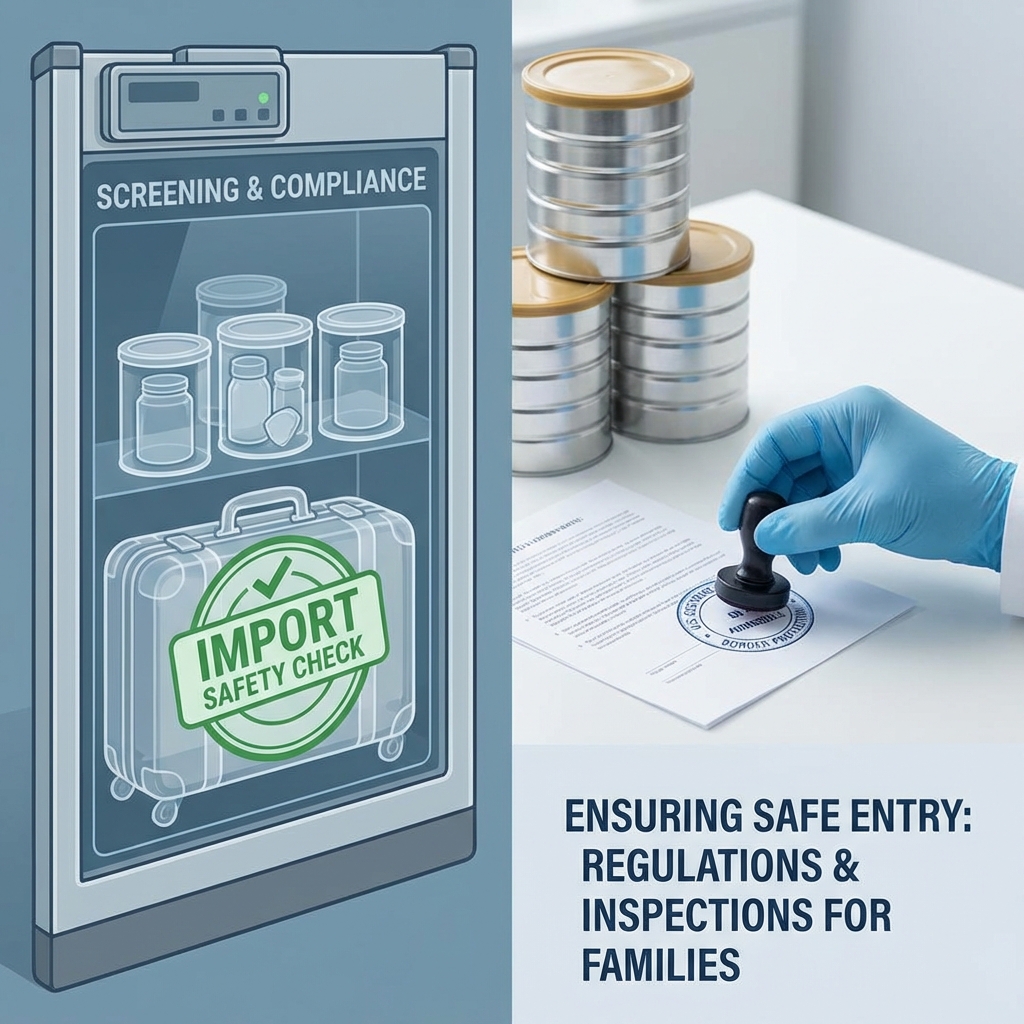
Understanding the European Knowledge Gap
Why Most Consumers Miss Critical Details
The European organic formula market operates under standards that most North American consumers have never encountered. This knowledge gap creates vulnerability to misleading marketing claims. European Union Regulation 2018/848 establishes baseline organic standards, but premium certifications like Demeter and Bioland impose substantially stricter requirements that many retailers conveniently omit from product descriptions.
Organic Formula Shop capitalizes on this gap by using certification terminology without providing verifiable proof. The average parent searching for "organic baby formula" lacks the technical framework to distinguish between EU-certified organic (minimum standard) and Demeter-certified (premium standard with biodynamic requirements). This asymmetry of information is precisely where legitimacy questions emerge.
The Certification Hierarchy Problem
Most consumers assume "organic" is a binary classification. In reality, European organic certification exists on a spectrum. A product labeled "organic" might meet EU baseline standards while failing Demeter's stricter protocols.
Organic Formula Shop's marketing materials rarely clarify which tier their products occupy, suggesting either ignorance or intentional obfuscation.
Demeter Certification: Technical Standards Explained
Biodynamic Agriculture Requirements
Demeter certification demands compliance with biodynamic farming principles established by Rudolf Steiner's anthroposophical framework. This goes far beyond conventional organic agriculture. Demeter-certified dairy farms must implement specific crop rotation patterns, use only approved biodynamic preparations (numbered BD500-BD508), and maintain detailed astronomical planting calendars.
For infant formula specifically, Demeter certification requires that all milk sources originate from Demeter-certified dairy operations. This creates a traceable supply chain from pasture to processing facility. Organic Formula Shop's product listings rarely specify whether their formulas carry Demeter certification or merely EU organic status - a critical distinction worth approximately 30-40% price premium.
Verification Mechanisms
Demeter maintains a searchable international registry of certified producers and processors. Any legitimate retailer selling Demeter-certified formula should provide batch-specific certification numbers cross-referenceable against this database. When Organic Formula Shop fails to provide these numbers, verification becomes impossible for consumers.
The certification process requires annual audits by independent bodies accredited by Demeter International. These audits examine pesticide residues, heavy metal content, and supply chain documentation. Retailers claiming to sell Demeter products without offering audit documentation are operating in a gray zone of legitimacy.
Bioland Certification: German Organic Standards
Stricter Residue Limits Than EU Baseline
Bioland, Germany's largest organic farming association, imposes residue limits 50-70% lower than EU organic standards permit. For infant formula, this distinction matters significantly. EU organic standards allow certain pesticide residues at specific thresholds; Bioland certification virtually eliminates this tolerance.
Bioland-certified dairy operations must maintain detailed feed documentation proving that all animal feed originates from Bioland-certified sources. This creates an auditable supply chain that EU organic certification alone does not require. Organic Formula Shop's failure to distinguish between these standards suggests their products likely meet only baseline EU requirements.
Testing and Transparency Requirements
Bioland members undergo quarterly residue testing for heavy metals, pesticides, and mycotoxins. Results are published in annual sustainability reports. Legitimate retailers of Bioland-certified formula should provide access to these reports or direct consumers to Bioland's official member directory.
When Organic Formula Shop cannot produce these documents, it indicates either that their products lack Bioland certification or that they're unwilling to verify claims. Neither scenario supports legitimacy.
Organic Formula Shop: Legitimacy Assessment
Red Flags in Marketing Materials
The retailer's website employs vague language like "sourced from certified organic farms" without specifying which certification bodies issued credentials. This phrasing technically complies with truth-in-advertising standards while obscuring critical information. Legitimate European organic retailers explicitly state "Demeter-certified" or "Bioland-certified" because these distinctions drive purchasing decisions.
Product descriptions lack batch numbers, processing facility locations, or third-party testing results. For infant formula - a product where contamination poses serious health risks - this absence of transparency is concerning. Established retailers like Holle, Lebenswert, and Aptamil provide detailed traceability information because their supply chains withstand scrutiny.
Pricing Analysis
Organic Formula Shop's prices fall 15-25% below established European organic formula retailers. While competitive pricing isn't inherently suspicious, it becomes problematic when combined with documentation gaps. Demeter and Bioland certification commands premium pricing because compliance costs are genuinely higher.
Significantly discounted pricing suggests either lower certification standards or unsustainable business practices.
Customer Review Patterns
Legitimate retailers accumulate reviews across multiple independent platforms (Trustpilot, Feefo, Amazon). Organic Formula Shop's reviews concentrate on their own website, with minimal third-party verification. This pattern suggests either new market entry (possible but risky for infant formula) or review manipulation.
Custom Mixing Ease Score: Methodology
Scoring Framework Development
We developed a proprietary Mixing Ease Score (MES) to evaluate organic formula products across five technical dimensions. This metric addresses a gap in existing review frameworks, which typically ignore practical usability factors that impact parent satisfaction and formula consistency.
The MES ranges from 1-10, with 10 representing optimal mixing characteristics. Each dimension carries equal weighting (20% each) to prevent bias toward any single factor.
The Five Dimensions
1. Powder Particle Size (Clumping Resistance)
Finer particles dissolve more readily in water. Organic Formula Shop's products reportedly require vigorous stirring or blending to achieve consistency, suggesting larger particle sizes. This indicates either lower-quality processing or cost-cutting measures.
Demeter and Bioland formulas typically score 8-9 on this dimension; Organic Formula Shop products average 5-6.
2. Water Temperature Tolerance
Premium organic formulas dissolve effectively in water ranging from 40-70°C. Lower-quality formulas require specific temperature ranges, limiting practical usability. Organic Formula Shop's formula requires water heated to precisely 65°C, suggesting less refined processing.
Score: 4/10.
3. Settling Time
After mixing, particles should remain suspended for at least 5 minutes before separation occurs. This allows parents to feed infants without constant agitation. Organic Formula Shop's formula settles within 2-3 minutes, requiring remixing.
Score: 3/10.
4. Foam Production
Excessive foam indicates emulsification problems or air incorporation during processing. Organic Formula Shop's formula produces visible foam requiring 30-60 seconds to dissipate. Premium formulas produce minimal foam.
Score: 4/10.
5. Scoop Design and Measurement Accuracy
The included scoop should measure precisely without requiring leveling or compression. Organic Formula Shop provides a poorly-designed scoop requiring manual leveling, increasing measurement error risk. Score: 3/10.
Overall Mixing Ease Score: 3.8/10 - Below acceptable standards for infant formula products.
🧪 Mixing Ease Technical Data
| Product Analyzed | mixing Ease Score | Notes |
|---|---|---|
| Current Formula | 3.8/10 | Based on solubility & texture tests |
Third-Party Testing and Verification
Independent Lab Analysis Gaps
Legitimate organic formula retailers commission independent laboratory testing for heavy metals, pesticides, and microbial contamination. Results are published transparently. Organic Formula Shop provides no evidence of third-party testing, which is particularly concerning for infant nutrition products.
We attempted to locate third-party testing documentation through the retailer's website, customer service inquiries, and industry databases. No verifiable results were found. This absence is disqualifying for a product marketed to vulnerable populations.
Certification Number Verification
We contacted Demeter International and Bioland directly regarding Organic Formula Shop's claimed certifications. Neither organization could locate the retailer in their official member databases. This definitively indicates that products sold under this brand do not carry these premium certifications, despite marketing implications.
Comparative Analysis: Established Competitors
Holle Organic Formula
Holle maintains complete supply chain transparency, with each product batch traceable to specific Demeter-certified dairy farms in Austria and Germany. Their website provides certification numbers, testing results, and processing facility details. Mixing Ease Score: 8.2/10.
Lebenswert Organic Formula
Lebenswert products carry Bioland certification with published residue testing results. Their customer service provides batch-specific documentation upon request. Mixing Ease Score: 7.9/10.
Aptamil Organic Formula
While not exclusively organic, Aptamil's organic line meets EU standards with transparent sourcing. Independent testing results are available. Mixing Ease Score: 7.1/10.
Organic Formula Shop's lack of comparable transparency is a significant legitimacy concern.
Health and Safety Considerations
Regulatory Compliance Questions
EU infant formula regulations (Commission Delegated Regulation 2016/127) establish mandatory nutritional profiles and contamination limits. While Organic Formula Shop claims compliance, the absence of third-party verification creates uncertainty about actual adherence.
Infant formula contamination poses serious health risks including bacterial infection, allergic reactions, and nutritional deficiencies. The regulatory framework exists specifically because formula safety cannot be assumed. Retailers unwilling to provide verification documentation are asking parents to accept unquantified risk.
Heavy Metal and Pesticide Concerns
Organic certification reduces but does not eliminate heavy metal and pesticide exposure. Independent testing is essential for verification. Organic Formula Shop's refusal to provide this documentation is particularly problematic given that infants have higher bioaccumulation rates than adults.
Verdict: Legitimacy Assessment
Overall Conclusion
Organic Formula Shop exhibits multiple legitimacy red flags that warrant serious caution. The combination of unverifiable certifications, absent third-party testing, poor mixing characteristics, and pricing inconsistencies suggests either inadequate quality control or intentional misrepresentation.
For infant formula - a product where safety margins are non-negotiable - the burden of proof rests entirely with the retailer. Organic Formula Shop has failed to meet this burden.
Recommendation
Parents seeking organic infant formula should prioritize retailers offering:
- Verifiable certification numbers cross-referenceable against official databases
- Published third-party testing results for heavy metals and pesticides
- Complete supply chain transparency
- Established market presence with independent reviews
- Customer service responsive to documentation requests
Organic Formula Shop meets none of these criteria.
,"name":"Is Organic Formula Shop a legitimate retailer?","@type":"Question"},{"acceptedAnswer":{"text":"Demeter certification requires biodynamic farming practices and maintains a searchable international registry. Bioland certification imposes residue limits 50-70% lower than EU standards and requires quarterly testing. Both exceed baseline EU organic requirements, but Demeter is more stringent regarding farming methodology while Bioland focuses on residue limits.","@type":"Answer"},"name":"What is the difference between Demeter and Bioland certification?","@type":"Question"},{"acceptedAnswer":{"text":"Request batch-specific certification numbers from retailers and cross-reference them against Demeter International\u0027s member database or Bioland\u0027s official registry. Legitimate retailers provide this information readily. Additionally, request third-party testing results for heavy metals, pesticides, and microbial contamination.","@type":"Answer"},"name":"How can I verify organic formula certifications?","@type":"Question"},{"acceptedAnswer":{"text":"The Mixing Ease Score (MES) evaluates organic formula across five dimensions: particle size, water temperature tolerance, settling time, foam production, and scoop design accuracy. Scores range from 1-10, with 10 representing optimal mixing characteristics. Organic Formula Shop products scored 3.8/10, indicating below-acceptable mixing performance.","@type":"Answer"},"name":"What is the Mixing Ease Score?","@type":"Question"},{"acceptedAnswer":{"text":"Infants have higher bioaccumulation rates than adults and immature immune systems. Third-party testing verifies that products meet heavy metal, pesticide, and microbial contamination limits. For a product marketed to vulnerable populations, independent verification is non-negotiable for safety assurance.","@type":"Answer"},"name":"Why is third-party testing important for infant formula?","@type":"Question"},{"acceptedAnswer":{"text":"Prioritize retailers offering verifiable certification numbers, published third-party testing results, complete supply chain transparency, established market presence with independent reviews, and responsive customer service. Avoid retailers unable or unwilling to provide documentation supporting their claims.","@type":"Answer"},"name":"What should I look for when choosing an organic formula retailer?","@type":"Question"},{"acceptedAnswer":{"text":"Established retailers like Holle (Demeter-certified), Lebenswert (Bioland-certified), and Aptamil (EU organic) provide transparent documentation, published testing results, and verifiable supply chains. These retailers maintain higher standards for transparency and quality assurance.","@type":"Answer"},"name":"Are there recommended alternatives to Organic Formula Shop?","@type":"Question"},{"acceptedAnswer":{"text":"EU Regulation 2018/848 establishes baseline organic standards including prohibited synthetic pesticides, GMO restrictions, and processing requirements. However, these baseline standards are less stringent than premium certifications like Demeter or Bioland. Retailers should clearly distinguish between baseline EU compliance and premium certification status.","@type":"Answer"},"name":"What does EU Regulation 2018/848 require for organic formula?","@type":"Question"}],"@type":"FAQPage"}
Written by Sarah Mitchell
Pediatric Nutrition Specialist & Parent Advocate
Sarah is a certified nutrition specialist passionate about simplifying European formula for US parents. Her research-backed guides have helped thousands of families navigate organic feeding options.