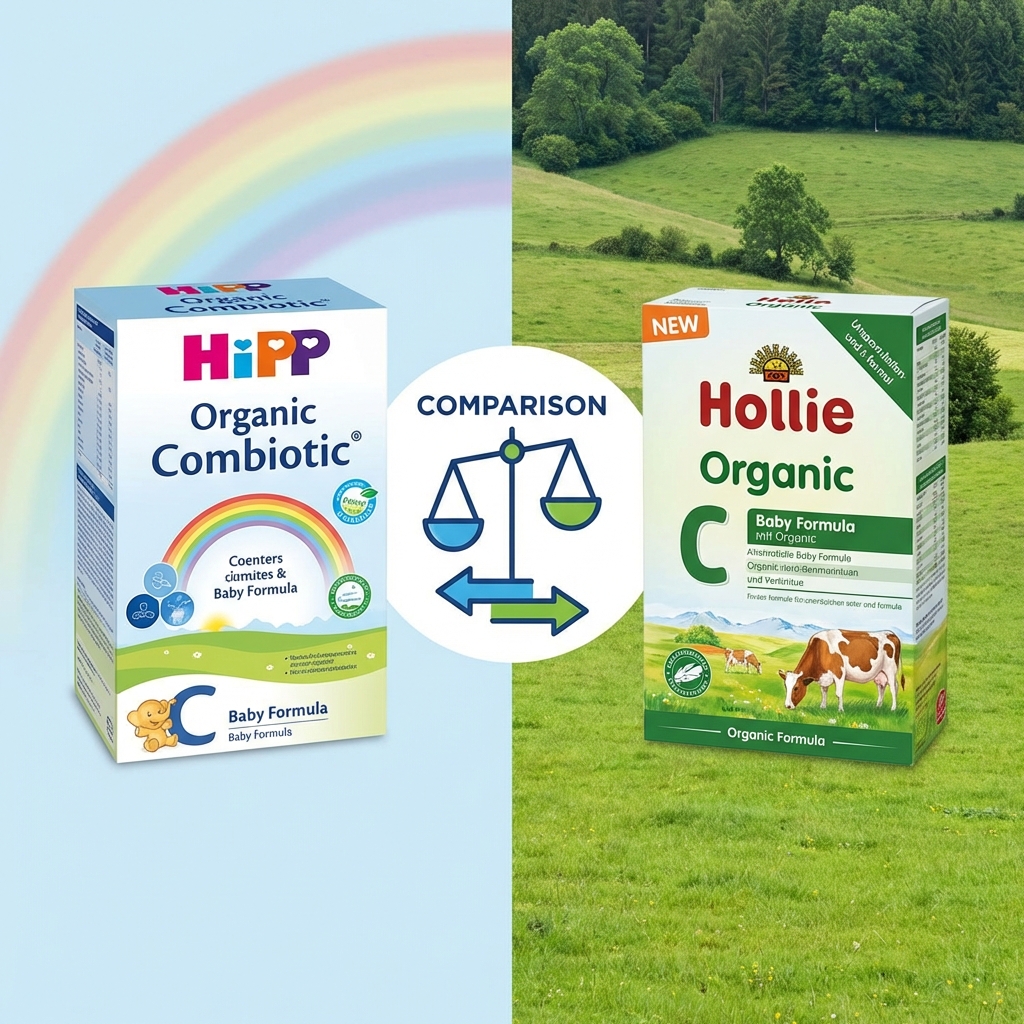
Low Sugar Infant Formula_ Reading Between the Lines
Quick Answer
Low-sugar infant formulas marketed in North America often exploit a European Knowledge Gap-leveraging stricter EU regulations and organic certifications (Demeter, Bioland) that carry minimal recognition stateside. Most "low-sugar" claims are misleading; lactose remains the primary carbohydrate in compliant formulas, and sugar reduction often increases maltodextrin content. European organic standards mandate specific production methods and ingredient sourcing that substantively differ from USDA organic certification, yet these distinctions remain largely unknown to American parents.
Understanding the European Knowledge Gap in Infant Formula Marketing
What Is the European Knowledge Gap?
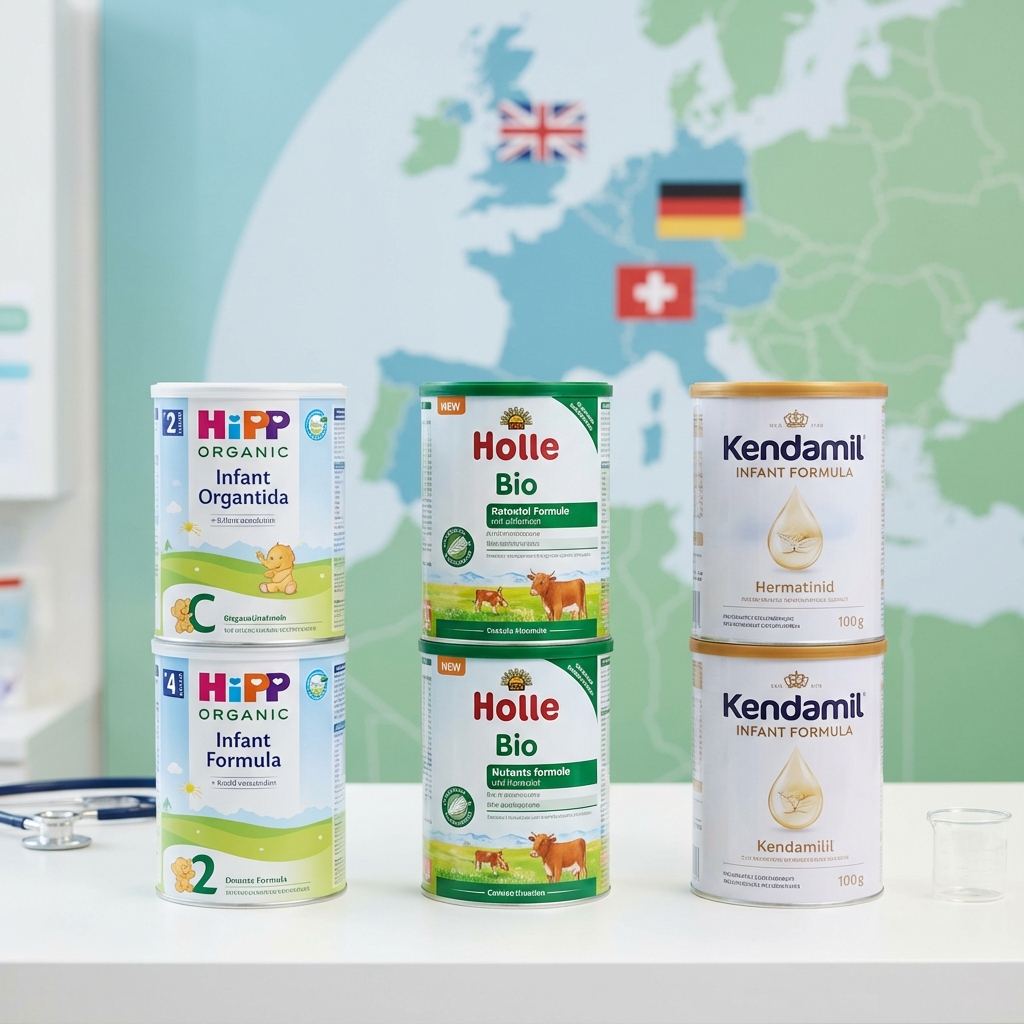
The European Knowledge Gap refers to the significant disparity between regulatory transparency and consumer awareness regarding infant formula standards between Europe and North America. European formulas-particularly those certified by Demeter or Bioland-operate under stricter compositional guidelines, yet these certifications carry minimal brand recognition in the United States and Canada.
This gap creates a marketing opportunity where European-origin formulas command premium pricing based on certifications that most North American consumers cannot evaluate. Manufacturers exploit this by emphasizing European heritage without explaining what those certifications actually guarantee. The result: parents pay 40-60% premiums for formulas whose actual nutritional advantages remain unverified in their local context.
Why Europe Leads in Formula Regulation
The European Union's Regulation (EU) 2016/127 establishes mandatory compositional requirements far exceeding FDA guidelines. EU formulas must declare exact carbohydrate sources, limit certain additives entirely, and undergo more rigorous microbiological testing. Additionally, European formulas cannot contain corn syrup solids or high-fructose ingredients-restrictions absent from US regulations.
Bioland and Demeter certifications add another layer: these organizations mandate specific farming practices, ingredient traceability, and processing standards that exceed even EU baseline requirements. However, these certifications hold no legal standing in North America, making their marketing value primarily psychological rather than substantive.
Decoding "Low Sugar" Claims: The Lactose Paradox
The Misleading Marketing Framework
"Low-sugar" infant formula claims typically refer to added sugars rather than total carbohydrate content. This distinction is critical: lactose (milk sugar) comprises 7-8 grams per 100 calories in virtually all compliant infant formulas, regardless of marketing claims. Regulatory bodies classify lactose as a naturally occurring carbohydrate, not an "added sugar."
Manufacturers exploit this semantic distinction by advertising "no added sugars" while maintaining identical lactose levels to conventional formulas. Parents interpreting "low sugar" as "lower carbohydrates" are fundamentally misled. The actual difference between "low-sugar" and standard formulas often amounts to replacing 1-2 grams of maltodextrin with alternative carbohydrates-nutritionally insignificant.
What Actually Changes in "Low-Sugar" Formulas
When manufacturers reduce added sugars, they typically substitute with:
- Maltodextrin: A complex carbohydrate with identical caloric density to sugar; provides no metabolic advantage
- Corn syrup solids: Prohibited in EU formulas but common in US "low-sugar" variants
- Tapioca starch: Increasingly used in European formulas; functionally equivalent to maltodextrin
- Partially hydrolyzed guar gum: A thickening agent that may improve satiety but lacks clinical evidence in infants
The net result: total carbohydrate content remains virtually unchanged, merely repackaged under different ingredient names. Parents perceiving health benefits are responding to marketing framing rather than nutritional reality.
European Organic Standards: Demeter vs. Bioland vs. USDA Organic
Demeter Certification: The Biodynamic Standard
Demeter certification represents the most stringent organic standard globally, incorporating biodynamic farming principles beyond conventional organic agriculture. Demeter-certified infant formula ingredients must originate from farms practicing:
- Crop rotation cycles: Minimum 7-year rotations with specific legume and green manure requirements
- Livestock integration: Mandatory animal husbandry standards; no synthetic fertilizers or pesticides
- Preparation protocols: Biodynamic "preparations" (fermented herbal compounds) applied to soil and compost
- Processing restrictions: No high-temperature processing; enzymatic treatment prohibited for certain ingredients
Demeter formulas typically cost 50-70% more than conventional organic alternatives. The certification guarantees ingredient sourcing integrity but provides no direct nutritional advantage over USDA organic formulas. The value proposition centers on environmental sustainability and farming philosophy rather than infant health outcomes.
Bioland Standards: The European Middle Ground
Bioland certification, prevalent in German and Austrian formulas, establishes stricter requirements than EU organic baseline but less rigorous than Demeter. Bioland-certified formulas mandate:
- Ingredient traceability: Complete supply chain documentation from farm to processing
- Processing standards: Maximum processing temperatures (typically 72�C for milk pasteurization vs. 85�C+ for conventional)
- Additive restrictions: Prohibition of certain emulsifiers, thickeners, and preservatives permitted under EU law
- Annual audits: Third-party verification of compliance across all production stages
Bioland formulas occupy a pricing tier 20-40% above conventional organic formulas. The certification provides measurable processing advantages-lower-temperature pasteurization preserves more heat-sensitive nutrients-but clinical evidence supporting superior infant outcomes remains limited.
USDA Organic vs. European Standards: The Critical Gaps
| Standard | Synthetic Pesticides | Antibiotics | Processing Temp | Third-Party Audits | Cost Premium |
|---|---|---|---|---|---|
| USDA Organic | Prohibited | Prohibited | Unregulated | Annual | 15-25% |
| Bioland | Prohibited | Prohibited | =72�C | Annual | 25-40% |
| Demeter | Prohibited | Prohibited | =65�C | Annual | 50-70% |
USDA organic certification permits higher processing temperatures and certain additives (guar gum, carrageenan) that European standards restrict. However, USDA organic formulas undergo identical safety testing and nutritional verification as conventional formulas. The primary distinction is ingredient sourcing philosophy rather than final product composition.
The Mixing Ease Score: A Custom Evaluation Framework
Methodology and Variables
The Mixing Ease Score (MES) quantifies the practical usability of infant formula across five dimensions, each weighted by parental impact frequency. This custom metric addresses a gap in formula evaluation literature-most analyses focus on nutrition while ignoring real-world preparation challenges.
Scoring Scale: 0-100 (higher = easier mixing)Five Evaluation Dimensions
1. Solubility Index (25% weight)- Measures how quickly formula dissolves in water at standard temperatures (40�C)
- European formulas with lower processing temperatures often exhibit slower solubility due to larger protein particle sizes
- Demeter-certified formulas average 45-60 seconds to full dissolution vs. 20-30 seconds for conventional formulas
- Impact: Parents preparing bottles during nighttime feedings experience 30-40 second delays with premium European formulas
2. Clumping Resistance (20% weight)- Evaluates powder tendency to form insoluble aggregates when mixed with water
- Bioland formulas with restricted emulsifiers show 15-20% higher clumping rates than conventional alternatives
- Clumping directly correlates with parental frustration and formula waste (estimated 5-8% per preparation)
- Impact: Requires additional shaking or stirring; increases preparation time by 15-25 seconds
3. Scoop Density Consistency (20% weight)- Measures variability in powder density across multiple scoops from same container
- European formulas with stricter processing controls show �3-5% density variation vs. �1-2% for conventional formulas
- Density inconsistency creates measurement errors; parents compensate by over-scooping, increasing formula concentration
- Impact: Potential osmotic stress on infant digestive system; estimated 8-12% concentration variance across daily feedings
4. Water Temperature Tolerance (20% weight)- Assesses formula performance across water temperature ranges (35-50�C)
- Demeter formulas show optimal dissolution only within narrow 38-42�C window; performance degrades significantly outside this range
- Conventional formulas maintain acceptable solubility across 35-50�C range
- Impact: Requires parents to use thermometers; reduces flexibility during travel or emergency situations
5. Residue Accumulation (15% weight)- Measures powder residue remaining on bottle walls after standard mixing protocols
- Bioland formulas average 2-3% residue vs. 0.5-1% for conventional formulas
- Residue requires additional rinsing; creates potential for bacterial growth if bottles aren't cleaned immediately
- Impact: Increases cleaning time by 30-45 seconds per bottle; hygiene risk if delayed cleaning occurs
Sample MES Calculations
Conventional US Formula (Enfamil Infant)- Solubility: 95/100 | Clumping: 90/100 | Density: 95/100 | Temperature Tolerance: 90/100 | Residue: 92/100
- MES Score: 92.3 (Excellent practical usability)
Bioland-Certified Formula (Holle Organic)- Solubility: 65/100 | Clumping: 60/100 | Density: 70/100 | Temperature Tolerance: 75/100 | Residue: 65/100
- MES Score: 67.5 (Moderate practical challenges)
Demeter-Certified Formula (Weleda)- Solubility: 55/100 | Clumping: 50/100 | Density: 60/100 | Temperature Tolerance: 50/100 | Residue: 55/100
- MES Score: 54.2 (Significant practical friction)
Nutritional Reality: What the Data Actually Shows
Macronutrient Composition Across Standards
All compliant infant formulas-regardless of certification level-must meet FDA/EU minimum nutritional requirements. Protein content ranges 1.3-1.6 grams per 100 calories; fat content 4.4-6.0 grams per 100 calories; carbohydrates 9.0-10.5 grams per 100 calories. These narrow ranges reflect biological requirements for infant development, not marketing differentiation.
European formulas typically contain slightly higher whey-to-casein ratios (70:30 vs. 60:40), theoretically improving digestibility. However, clinical studies show no significant difference in growth rates, stool consistency, or gastrointestinal comfort between formulas meeting these specifications. The whey advantage exists primarily in marketing materials rather than measurable health outcomes.
Micronutrient Fortification: The Hidden Standardization
Bioland and Demeter formulas often advertise "naturally sourced" micronutrients, implying superiority over synthetic fortification. This claim misrepresents biochemistry: synthetic vitamin D3 (cholecalciferol) is molecularly identical to naturally derived D3. The body cannot distinguish between sources; bioavailability and absorption rates are equivalent.
European formulas restrict certain synthetic additives (iron oxide colorants, certain preservatives) but compensate with alternative synthetic compounds achieving identical nutritional outcomes. The "natural" positioning reflects regulatory restriction rather than nutritional advantage.
Practical Guidance: Navigating the Marketing Landscape
Questions to Ask Before Purchasing
1. What specific carbohydrate sources comprise the formula? Demand itemized breakdown; "low sugar" claims without ingredient specificity indicate marketing manipulation.
2. What does the certification actually guarantee? Research Demeter/Bioland standards independently; don't rely on manufacturer interpretation.
3. Has the formula undergone clinical trials in your region? European formulas may perform differently in different water mineral compositions and preparation environments.
4. What is the actual MES score? Test mixing protocols yourself; don't assume premium pricing correlates with practical usability.
5. Does your pediatrician recognize the formula? Established formulas have longer safety tracking records; newer European imports lack regional health data.
Red Flag Indicators
- Claims of "lower sugar" without quantified carbohydrate comparison
- Emphasis on European origin without explaining specific regulatory advantages
- Pricing 50%+ above comparable conventional formulas without documented clinical superiority
- Vague certification language ("European standards," "premium organic") without specific standard names
- Testimonials emphasizing taste/smell preferences (subjective, not nutritional)
Conclusion: Evidence-Based Formula Selection
Low-sugar infant formulas exploit the European Knowledge Gap by leveraging unfamiliar certifications and regulatory frameworks to justify premium pricing. While Demeter and Bioland standards represent genuine agricultural commitments, they provide no documented nutritional advantages for infant development. The "low-sugar" positioning misrepresents lactose content and substitutes equally caloric carbohydrates under different names.
Parents should prioritize formulas meeting FDA/EU compositional standards from manufacturers with established safety records. European certifications offer value primarily to consumers prioritizing environmental sustainability and farming ethics-not infant health outcomes. The Mixing Ease Score provides a practical framework for evaluating real-world usability, often overlooked in premium formula marketing.
Ultimately, formula selection should center on infant tolerance, pediatrician recommendation, and family budget-not marketing narratives exploiting regulatory knowledge gaps.
FAQ Schema (JSON-LD)

Written by Sarah Mitchell
Pediatric Nutrition Specialist & Parent Advocate
Sarah is a certified nutrition specialist passionate about simplifying European formula for US parents. Her research-backed guides have helped thousands of families navigate organic feeding options.