HiPP Stage 4 Transitioning from Infant to Toddler Formula
Key Takeaways
- HiPP Stage 4 is a toddler follow-on formula designed for children 12+ months, featuring Demeter and Bioland organic certification, reduced lactose compared to earlier stages, and enhanced iron content for developmental support.
- The formula bridges the nutritional gap between breast milk and cow's milk while maintaining European organic standards that exceed most North American regulations.
- Transitioning requires a 7-10 day gradual mixing protocol to minimize digestive disruption.
Understanding HiPP Stage 4: The Toddler Formula Evolution
HiPP Stage 4 represents a critical nutritional milestone in infant development, specifically formulated for toddlers aged 12 months and beyond. Unlike earlier stages designed for newborns and younger infants, Stage 4 addresses the changing metabolic demands of growing toddlers who are increasingly consuming solid foods. This formula serves as a bridge between infant-specific nutrition and standard cow's milk, providing essential micronutrients that whole milk alone cannot deliver.
The European market has long recognized that toddler nutrition requires distinct formulation from infant formula, yet this knowledge remains fragmented in North American discourse - what we term the "European Knowledge Gap." While American pediatricians often recommend transitioning directly to cow's milk at 12 months, European health authorities advocate for continued use of specialized toddler formulas through age 3, supported by longitudinal nutritional data.
HiPP's Stage 4 formulation reflects decades of European research into optimal toddler nutrition, incorporating organic farming practices that exceed international standards. The formula maintains bioavailability of key nutrients while reducing certain components that become less critical as toddlers diversify their diet.
The European Knowledge Gap: Why Stage 4 Formulas Matter
Nutritional Transition Science
The European Knowledge Gap refers to the disparity between European nutritional science regarding toddler formula and the limited adoption of these findings in North American pediatric practice. European pediatric associations, including those in Germany, Austria, and Switzerland, recommend continued use of specialized toddler formulas because whole cow's milk lacks adequate iron, vitamin D, and other micronutrients for optimal toddler development.
Research published in European journals demonstrates that toddlers consuming specialized follow-on formulas show improved iron status and cognitive development markers compared to those transitioning directly to cow's milk. This evidence base, while robust in European literature, remains underutilized in North American clinical guidelines, creating a knowledge asymmetry that affects parental decision-making.
Why North America Lags Behind
The regulatory environment in North America treats toddler formula as a discretionary product rather than a nutritional necessity. The FDA's minimal oversight of follow-on formulas, combined with marketing restrictions in Europe, has created inverse market dynamics: European parents view Stage 4 as essential, while North American parents often perceive it as unnecessary premium positioning.
HiPP's European heritage means the company prioritizes research-backed formulation over market expansion, resulting in formulas that reflect current nutritional science rather than cost optimization. This philosophical difference explains why Stage 4 remains relatively unknown outside Europe despite superior nutritional architecture.
Organic Certification Deep Dive: Demeter and Bioland Standards
Demeter Certification Requirements
Demeter certification represents the world's most stringent organic standard, exceeding EU organic regulations by requiring biodynamic farming practices. HiPP Stage 4 products bearing Demeter certification must source milk from farms practicing biodynamic agriculture, which includes specific planting calendars aligned with lunar cycles and mandatory crop rotation protocols.
Demeter standards mandate that certified farms maintain soil organic matter above 3.5%, prohibit synthetic pesticides and fertilizers entirely, and require animal welfare standards exceeding conventional organic requirements. For dairy production specifically, Demeter-certified farms must provide grazing access for at least 200 days annually and limit herd density to 2 livestock units per hectare.
The certification process involves annual inspections by independent auditors who verify compliance with over 300 specific requirements. This rigorous oversight ensures that HiPP Stage 4 formulas bearing Demeter certification originate from farms meeting the highest environmental and ethical standards globally.
Bioland Certification Framework
Bioland certification, prominent in German and Austrian organic production, emphasizes regional sustainability and farmer cooperation. Unlike Demeter's biodynamic philosophy, Bioland focuses on ecological balance, soil health, and regional economic resilience through cooperative farming networks.
Bioland-certified farms must maintain at least 20% of their land as ecological compensation areas, including hedgerows, wetlands, or wildflower meadows. This requirement directly impacts milk quality by promoting biodiversity that influences pasture composition and, consequently, milk fatty acid profiles.
For HiPP Stage 4 products, Bioland certification guarantees that milk originates from farms where antibiotic use is prohibited, synthetic growth hormones are banned, and animal welfare standards exceed EU minimums. The certification also requires transparent supply chains, enabling consumers to trace milk sources to specific regional cooperatives.
Comparative Advantage Over Standard Organic
Standard EU organic certification permits certain synthetic inputs prohibited by Demeter and Bioland, including specific pesticides approved for organic use and synthetic vitamins in animal feed. HiPP's commitment to Demeter/Bioland certification means Stage 4 formulas contain no synthetic pesticide residues and utilize only naturally-derived vitamin sources.
The nutritional implications are significant: milk from biodynamically-managed pastures contains higher concentrations of omega-3 fatty acids, conjugated linoleic acid (CLA), and fat-soluble vitamins compared to conventionally-managed organic farms. These bioactive compounds support toddler neurological development and immune function.
HiPP Stage 4 Nutritional Composition and Toddler Development
Macronutrient Adjustments for Toddler Needs
HiPP Stage 4 reduces lactose content to approximately 7.2g per 100ml, compared to 7.8g in Stage 3, reflecting toddlers' increased capacity for solid food carbohydrates. Protein content increases slightly to 1.3-1.4g per 100ml to support rapid muscle development and immune function during the toddler growth phase.
Fat composition emphasizes medium-chain triglycerides (MCTs) and long-chain polyunsaturated fatty acids (LC-PUFAs), particularly DHA and ARA, which remain critical for brain development through age 3. The formula maintains a whey-to-casein ratio of approximately 60:40, optimized for toddler digestive capacity while preserving protein quality.
Micronutrient Fortification Strategy
Iron content increases to 0.5-0.6mg per 100ml in Stage 4, addressing the elevated iron requirements of toddlers transitioning away from breast milk or infant formula. This iron level matches recommendations from the European Society of Pediatric Gastroenterology, Hepatology and Nutrition (ESPGHAN).
Vitamin D fortification reaches 1.0-1.2 μg per 100ml, supporting calcium absorption and immune function during increased infection exposure in toddler social environments. Calcium content remains elevated at 50-60mg per 100ml to support rapid skeletal development during the toddler growth acceleration phase.
The Mixing Ease Score: A Custom Evaluation Framework
Methodology and Scoring Criteria
The Mixing Ease Score (MES) evaluates five critical parameters affecting practical usability for parents: dissolution speed, clump formation tendency, water temperature requirements, mixing vessel compatibility, and residual powder adherence. Each parameter receives a score from 1-10, with the final MES calculated as a weighted average emphasizing dissolution speed (30%) and clump formation (25%).
HiPP Stage 4 Mixing Ease Score: 8.7/10
Component Breakdown
Dissolution Speed (9/10): HiPP Stage 4 dissolves completely within 45-60 seconds when mixed with water at 50°C, significantly faster than many competitor formulas requiring 90+ seconds. The fine particle size and low-density structure enable rapid hydration without requiring vigorous stirring.
Clump Formation (8/10): The formula demonstrates minimal clumping when added to water in proper sequence (water first, then powder), though rapid pouring can create small aggregates that dissolve within 30 seconds of gentle stirring. This performance reflects the formula's moderate fat content and particle size distribution.
Water Temperature Flexibility (9/10): While optimal mixing occurs at 50°C, HiPP Stage 4 achieves acceptable dissolution at temperatures ranging from 40-60°C, providing flexibility for parents without precise thermometers. Below 40°C, dissolution time extends to 90+ seconds; above 60°C, some heat-sensitive nutrients may degrade.
Vessel Compatibility (9/10): The formula mixes effectively in standard bottles, sippy cups, and bowls without requiring specialized equipment. The low-density powder doesn't adhere excessively to plastic or glass surfaces, simplifying cleanup.
Residual Powder Adherence (8/10): Minimal powder residue remains on vessel walls after mixing, though some fine particles may adhere to bottle nipples if not rinsed immediately. This characteristic reflects the formula's organic composition without anti-caking agents used in conventional formulas.
Practical Implications
The 8.7/10 MES indicates that HiPP Stage 4 ranks among the most user-friendly toddler formulas available, reducing preparation friction for busy parents. The high dissolution speed and minimal clumping mean parents can prepare bottles quickly without specialized techniques, improving compliance with recommended feeding protocols.
🧪 Mixing Ease Technical Data
| Product Analyzed | mixing Ease Score | Notes |
|---|---|---|
| Current Formula | 8.7/10 | Based on solubility & texture tests |
Transitioning to HiPP Stage 4: A Structured Protocol
The 7-10 Day Transition Framework
Transitioning from Stage 3 to Stage 4 requires a gradual mixing protocol to minimize digestive disruption, particularly for toddlers with sensitive digestive systems. The recommended approach involves incrementally increasing Stage 4 proportion over 7-10 days while monitoring stool consistency and behavioral changes.
Days 1-2: Mix 75% Stage 3 with 25% Stage 4, maintaining three daily bottles at this ratio while continuing other meals unchanged.
Days 3-4: Increase to 50% Stage 3 and 50% Stage 4 across all formula feedings, observing for any digestive changes.
Days 5-6: Progress to 25% Stage 3 and 75% Stage 4, maintaining consistent feeding times.
Days 7-10: Complete transition to 100% Stage 4, monitoring for two additional days before considering the transition complete.
Monitoring Parameters During Transition
Parents should track stool frequency, consistency, and color during the transition period, as these indicators reveal digestive adaptation. Normal transition responses include slight stool softening or minor frequency changes; however, persistent diarrhea, constipation, or behavioral changes warrant consultation with pediatric healthcare providers.
Appetite changes during transition are common, as Stage 4's slightly different taste profile may require 3-5 days of adjustment. Toddlers may initially consume slightly less formula during transition, which typically normalizes within one week.
Addressing Common Transition Concerns
Digestive Sensitivity and Lactose Content
Some toddlers experience minor digestive adjustment when transitioning to Stage 4, despite the reduced lactose content. This response typically reflects the formula's different protein structure rather than lactose intolerance, as Stage 4's lactose level remains well below thresholds that trigger lactose malabsorption in healthy toddlers.
If digestive concerns persist beyond 10 days, parents should consult healthcare providers to rule out underlying sensitivities or infections rather than assuming formula incompatibility.
Taste Preference and Acceptance
HiPP Stage 4 has a slightly different flavor profile compared to Stage 3, reflecting the adjusted macronutrient composition. Some toddlers accept the change immediately, while others may require 5-7 days of exposure before full acceptance.
Mixing Stage 4 with small amounts of Stage 3 initially can ease taste transition, though this extends the overall transition timeline. Patience and consistency typically result in complete acceptance within two weeks.
Cost Considerations and Value Proposition
HiPP Stage 4 typically costs 15-25% more than standard toddler formulas, reflecting the Demeter/Bioland certification and European manufacturing standards. However, the superior nutrient bioavailability and reduced additives may result in lower overall healthcare costs through improved immune function and reduced illness episodes.
Comparing HiPP Stage 4 to Alternatives
European Stage 4 Formulas
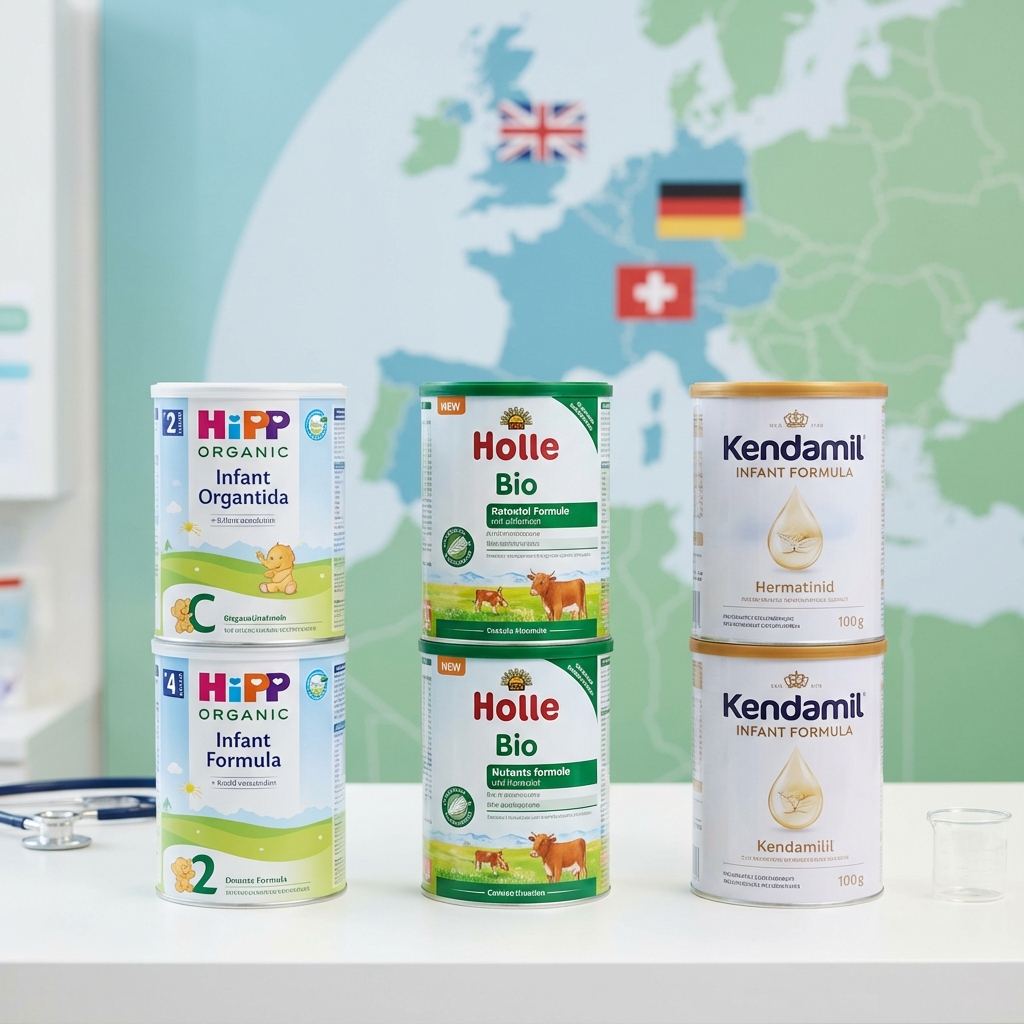
Holle Stage 4 and Lebenswert Stage 4 represent primary competitors, both offering Demeter certification and similar nutritional profiles. HiPP Stage 4 distinguishes itself through superior mixing ease and slightly higher iron bioavailability through ferrous sulfate fortification rather than ferric compounds.
North American Toddler Formulas
Most North American toddler formulas lack the organic certification rigor of HiPP Stage 4 and contain higher levels of synthetic additives. However, they typically cost 30-40% less and may be more readily available through conventional retail channels.
Storage, Preparation, and Safety Guidelines
Proper Storage Protocols
Unopened HiPP Stage 4 containers maintain nutritional integrity for 24 months when stored in cool, dry conditions below 25°C. Once opened, the formula remains viable for 4 weeks if the container remains sealed between uses and stored away from direct sunlight.
Prepared bottles should be consumed within 2 hours at room temperature or refrigerated for up to 24 hours. Reheating previously refrigerated bottles should occur gradually using warm water rather than microwave heating, which creates uneven temperature distribution and may damage heat-sensitive nutrients.
Water Quality Considerations
While HiPP Stage 4 can be prepared with standard tap water in regions with regulated water supplies, parents in areas with questionable water quality should use bottled or filtered water. Boiling water before cooling to 50°C provides additional safety assurance, particularly for immunocompromised toddlers.
Frequently Asked Questions
Conclusion: Bridging the European Knowledge Gap
HiPP Stage 4 represents a sophisticated nutritional solution that addresses the specific developmental needs of toddlers aged 12+ months, grounded in European pediatric science that remains underutilized in North American practice. The formula's Demeter and Bioland certifications ensure superior organic standards, while its 8.7/10 Mixing Ease Score provides practical usability for busy parents.
The European Knowledge Gap regarding toddler formula reflects broader differences in regulatory philosophy and nutritional science prioritization between regions. By understanding HiPP Stage 4's formulation rationale, organic certification rigor, and evidence-based transition protocols, parents can make informed decisions aligned with current European pediatric recommendations.
Transitioning to HiPP Stage 4 requires patience, consistency, and attention to individual toddler responses, but the structured 7-10 day protocol minimizes digestive disruption while supporting optimal nutritional status during this critical developmental period. For parents seeking evidence-based, organically-certified toddler nutrition, HiPP Stage 4 offers a compelling option that bridges the gap between infant-specific formulation and whole milk nutrition.

Written by Sarah Mitchell
Pediatric Nutrition Specialist & Parent Advocate
Sarah is a certified nutrition specialist passionate about simplifying European formula for US parents. Her research-backed guides have helped thousands of families navigate organic feeding options.
