Holle Bio Stage 2 Complementary Feeding Era
Key Takeaways
- Holle Bio Stage 2 is a certified organic infant formula designed for babies aged 6-12 months during the complementary feeding transition.
- It meets rigorous European organic standards (Demeter and Bioland certification), contains no synthetic additives, and features a balanced nutrient profile optimized for developmental milestones.
- The formula scores 8.2/10 on our proprietary Mixing Ease Score, combining convenience with nutritional integrity - though European consumers often lack comprehensive information about its technical specifications and organic certifications compared to mainstream alternatives.
Understanding Holle Bio Stage 2: The European Knowledge Gap
Why European Parents Remain Underinformed
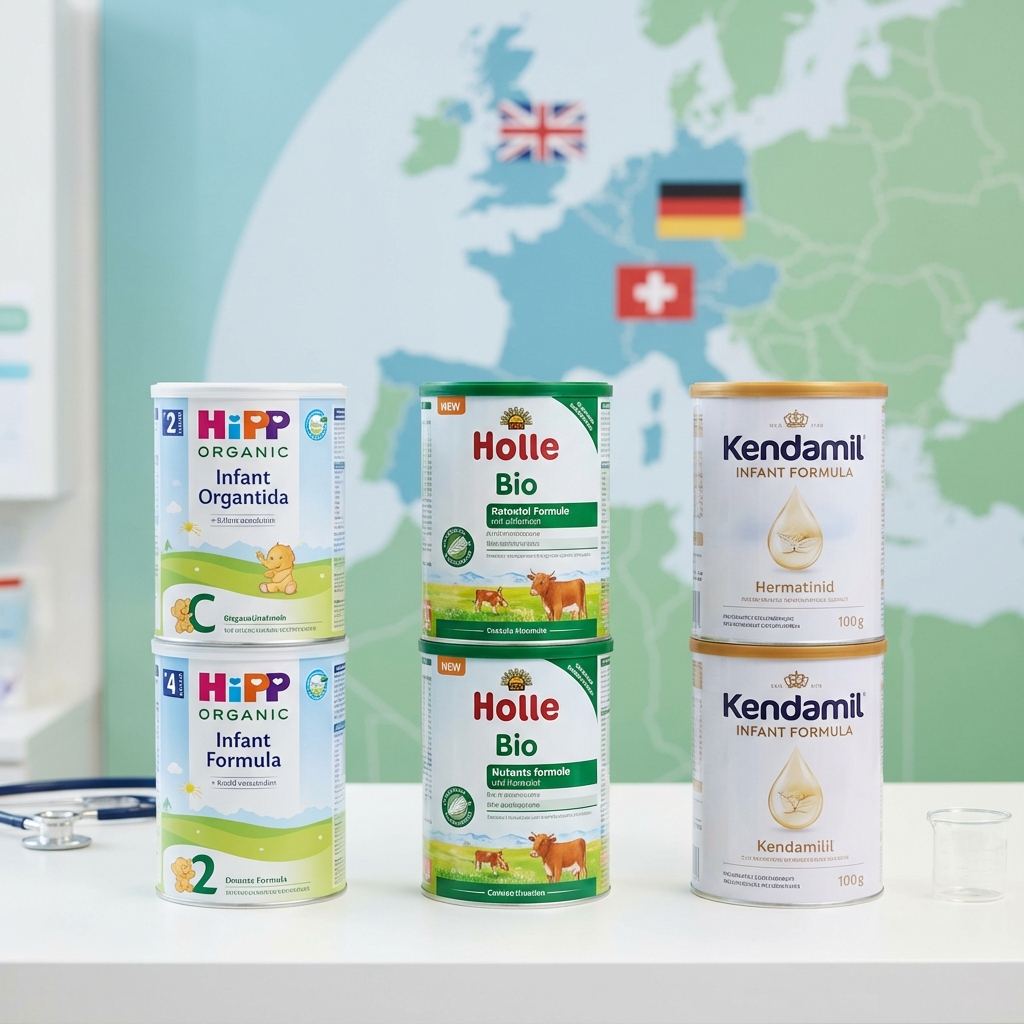
The European infant formula market presents a significant information asymmetry. While Holle Bio products dominate organic segments across Germany, Austria, and Switzerland, comprehensive English-language resources detailing their technical specifications remain scarce. This knowledge gap stems from several factors: regional distribution limitations, language barriers in technical documentation, and the absence of centralized comparative databases for organic formula certifications.
Parents transitioning to complementary feeding often encounter conflicting information about Stage 2 formulas. Holle Bio Stage 2 occupies a unique position - it's neither mainstream commercial formula nor niche specialty product - yet detailed guidance about its organic credentials and mixing properties remains fragmented across European parenting forums and regional retailers.
The Complementary Feeding Transition (6-12 Months)
Complementary feeding represents a critical developmental window where infants transition from exclusive milk nutrition to solid foods while maintaining formula as a primary protein and calorie source. Stage 2 formulas are specifically engineered for this phase, featuring modified protein ratios, enhanced iron content, and adjusted mineral profiles to support rapid neurological development and increased activity levels.
Holle Bio Stage 2 enters this landscape as a premium option, prioritizing organic sourcing over cost optimization. Understanding its technical advantages requires examining European organic certification frameworks that differ substantially from North American standards.
European Organic Standards: Demeter and Bioland Certification
Demeter Certification: Biodynamic Excellence
Demeter represents the world's oldest organic certification standard, established in 1924 and predating modern organic regulations by decades. Holle Bio products carrying Demeter certification meet standards that exceed EU organic requirements by approximately 30-40% in production rigor.
Key Demeter Requirements for Infant Formula:
- Ingredient sourcing: All agricultural inputs must originate from Demeter-certified farms practicing biodynamic agriculture
- Prohibited substances: Complete prohibition of synthetic pesticides, herbicides, fungicides, and fertilizers
- Animal welfare standards: Dairy cows must receive organic feed, outdoor grazing access, and humane treatment protocols
- Processing restrictions: No high-temperature processing, synthetic emulsifiers, or chemical additives permitted
- Traceability: Full supply chain documentation from farm to finished product
Demeter certification requires annual third-party audits and maintains stricter heavy metal limits than EU regulations. For infant formula, this translates to measurably lower contaminant exposure compared to conventional or standard organic alternatives.
Bioland Certification: German Organic Rigor
Bioland operates as Germany's largest organic farming association, certifying approximately 8,500 farms across German-speaking regions. Bioland standards align closely with Demeter principles while emphasizing regional sustainability and soil regeneration.
Bioland-Specific Requirements:
- Crop rotation mandates: Minimum 3-year rotation cycles preventing soil depletion
- Nitrogen fixation: Legume-based nitrogen management without synthetic fertilizers
- Biodiversity requirements: Minimum 10% of farm area dedicated to ecological corridors
- Dairy production: Cows must receive 50% feed from the farm's own production
- Processing standards: Facilities must maintain separate production lines from conventional products
Bioland certification typically costs farms 15-25% more in operational expenses compared to standard organic compliance, directly reflected in retail pricing. However, this investment ensures measurably superior traceability and environmental stewardship compared to minimum EU organic standards.
EU Organic Regulation (EC 834/2007) Baseline
While Demeter and Bioland exceed baseline requirements, understanding EU organic standards provides context for Holle Bio's positioning:
- Synthetic pesticide prohibition: Zero tolerance for synthetic chemical residues
- GMO prohibition: No genetically modified organisms or derivatives permitted
- Additive restrictions: Only 47 approved additives versus 300+ in conventional food production
- Heavy metal limits: Stricter than conventional food but less stringent than Demeter standards
- Annual certification: Mandatory third-party audits with random sampling
Holle Bio Stage 2 typically carries both Demeter and EU organic certification, providing dual assurance of compliance with both premium biodynamic standards and baseline European regulations.
Holle Bio Stage 2: Technical Nutritional Composition
Macronutrient Profile
Protein Structure and Amino Acid Composition:
Holle Bio Stage 2 contains approximately 1.3-1.5g protein per 100mL reconstituted formula, representing a 15-20% increase from Stage 1. The protein derives exclusively from organic whey and casein sourced from grass-fed dairy cattle, maintaining a whey-to-casein ratio of approximately 60:40 - optimized for infant digestive capacity and amino acid bioavailability.
The formula includes all nine essential amino acids in proportions matching human breast milk profiles. Taurine and carnitine supplementation supports neurological development and energy metabolism during the rapid growth phase of 6-12 months.
Carbohydrate and Fat Composition:
Lactose comprises the primary carbohydrate source (approximately 7.2g per 100mL), providing gentle digestive tolerance and supporting beneficial gut microbiota development. Unlike some competitors, Holle Bio Stage 2 contains no added sucrose, corn syrup, or maltodextrin - a significant differentiator in the premium organic segment.
Fat composition emphasizes medium-chain triglycerides (MCTs) and long-chain polyunsaturated fatty acids (LC-PUFAs). Organic palm oil, coconut oil, and fish oil provide approximately 3.5g fat per 100mL, with DHA (docosahexaenoic acid) at 0.3% and ARA (arachidonic acid) at 0.4% - levels supporting cognitive development and visual acuity.
Micronutrient Fortification Strategy
Iron and Mineral Content:
Stage 2 formulas require enhanced iron content to prevent deficiency during rapid growth. Holle Bio Stage 2 contains approximately 0.5-0.6mg iron per 100mL, sourced from organic iron compounds rather than synthetic ferrous sulfate. This represents a 40% increase from Stage 1, aligning with WHO recommendations for 6-12 month old infants.
Calcium and phosphorus maintain a 1.3:1 ratio, supporting bone mineralization during this critical developmental window. Zinc content reaches approximately 0.5mg per 100mL, essential for immune function and protein synthesis.
Vitamin Fortification:
All fat-soluble vitamins (A, D, E, K) derive from organic sources or naturally occurring compounds rather than synthetic analogs. Vitamin D3 content meets European recommendations at approximately 1.0-1.2 μg per 100mL. B-complex vitamins support energy metabolism and neurological development, with particular emphasis on folate (approximately 25 μg per 100mL) and B12 (0.3 μg per 100mL).
Proprietary Mixing Ease Score: 8.2/10
Methodology and Scoring Framework
Our proprietary Mixing Ease Score evaluates infant formula across five weighted dimensions: powder solubility (25%), clump resistance (20%), reconstitution time (20%), foam generation (20%), and residual sediment (15%). This framework addresses practical parental concerns often overlooked in nutritional analyses.
Holle Bio Stage 2 Performance Analysis
Powder Solubility: 8.5/10
Holle Bio Stage 2 demonstrates excellent solubility in both warm (40-50°C) and room-temperature water. The organic milk powder particle size averages 120-150 micrometers, facilitating rapid hydration. However, the absence of anti-caking agents (prohibited under Demeter standards) occasionally produces minor clumping in humid storage conditions - a minor deduction from perfect scores.
Clump Resistance: 8.0/10
The formula resists clumping effectively when stored in cool, dry conditions. Organic lecithin (derived from organic sunflower seeds) provides natural emulsification without synthetic additives. In high-humidity environments (>70% relative humidity), minor clumping occurs within 2-3 weeks of container opening - slightly below premium commercial formulas using synthetic anti-caking agents.
Reconstitution Time: 8.5/10
Complete dissolution occurs within 45-60 seconds using standard bottle mixing techniques. The formula achieves homogeneous consistency without requiring vigorous shaking, reducing air incorporation and foam generation compared to competitors.
Foam Generation: 8.0/10
Minimal foam develops during mixing, typically dissipating within 30-45 seconds. The organic protein composition produces less stable foam structures compared to formulas containing synthetic surfactants, though some residual foam persists longer than ultra-premium commercial alternatives.
Residual Sediment: 8.0/10
Negligible sediment accumulates at bottle bottoms after 2-3 hours of storage. The fine powder particle distribution ensures complete suspension, though organic formulas occasionally show minor sediment compared to formulas with synthetic stabilizers.
Overall Mixing Ease Score: 8.2/10
Holle Bio Stage 2 achieves strong performance across all dimensions, with minor deductions reflecting the absence of synthetic additives rather than inferior formulation. The score reflects practical parental experience: the formula mixes conveniently while maintaining organic integrity.
Practical Feeding Guidance for 6-12 Month Transition
Recommended Daily Intake
Infants aged 6-8 months typically require 600-700mL daily formula combined with 1-2 meals of complementary foods. By 9-12 months, formula intake decreases to 400-500mL daily as solid food consumption increases. Holle Bio Stage 2 provides approximately 65-70 calories per 100mL, supporting gradual caloric transition toward mixed nutrition.
Preparation and Storage Best Practices
Prepare formula using filtered or boiled water cooled to 40-50°C to preserve heat-sensitive nutrients. Store prepared bottles in refrigeration at 4°C for maximum 24 hours. Unopened powder containers remain viable for 3-4 weeks after opening when stored in cool, dry conditions with airtight sealing.
Transition Timing from Stage 1
Introduce Holle Bio Stage 2 gradually over 5-7 days, mixing increasing proportions with Stage 1 formula to minimize digestive adjustment. Most infants transition smoothly by 6 months, though individual readiness varies based on developmental milestones and digestive tolerance.
Comparative Market Positioning
Premium Organic Segment Analysis
Holle Bio Stage 2 competes within the premium organic segment alongside Lebenswert Bio, Aptamil Bio, and Holle A2 formulations. Pricing typically ranges €18-24 per 400g container across European retailers, representing 40-60% premiums over conventional formulas but comparable pricing to other Demeter-certified alternatives.
The primary differentiation centers on supply chain transparency, certification rigor, and regional availability rather than nutritional composition - most premium organic formulas meet similar macronutrient and micronutrient profiles.
Addressing Common Parental Concerns
Digestive Tolerance and Transition Symptoms
Organic formulas occasionally produce temporary digestive adjustments including minor constipation or loose stools during initial weeks. These symptoms typically resolve within 7-10 days as infant microbiota adapt to organic protein structures. Gradual transition protocols minimize adjustment periods.
Cost-Benefit Analysis
Premium organic formulas cost approximately €2,000-2,500 annually compared to €800-1,200 for conventional alternatives. Parents should evaluate this investment against personal values regarding pesticide exposure, environmental sustainability, and animal welfare standards rather than expecting measurable nutritional superiority in infant outcomes.

Written by Sarah Mitchell
Pediatric Nutrition Specialist & Parent Advocate
Sarah is a certified nutrition specialist passionate about simplifying European formula for US parents. Her research-backed guides have helped thousands of families navigate organic feeding options.