Corn Free Infant Formula Options for Allergic Babies
Key Takeaways
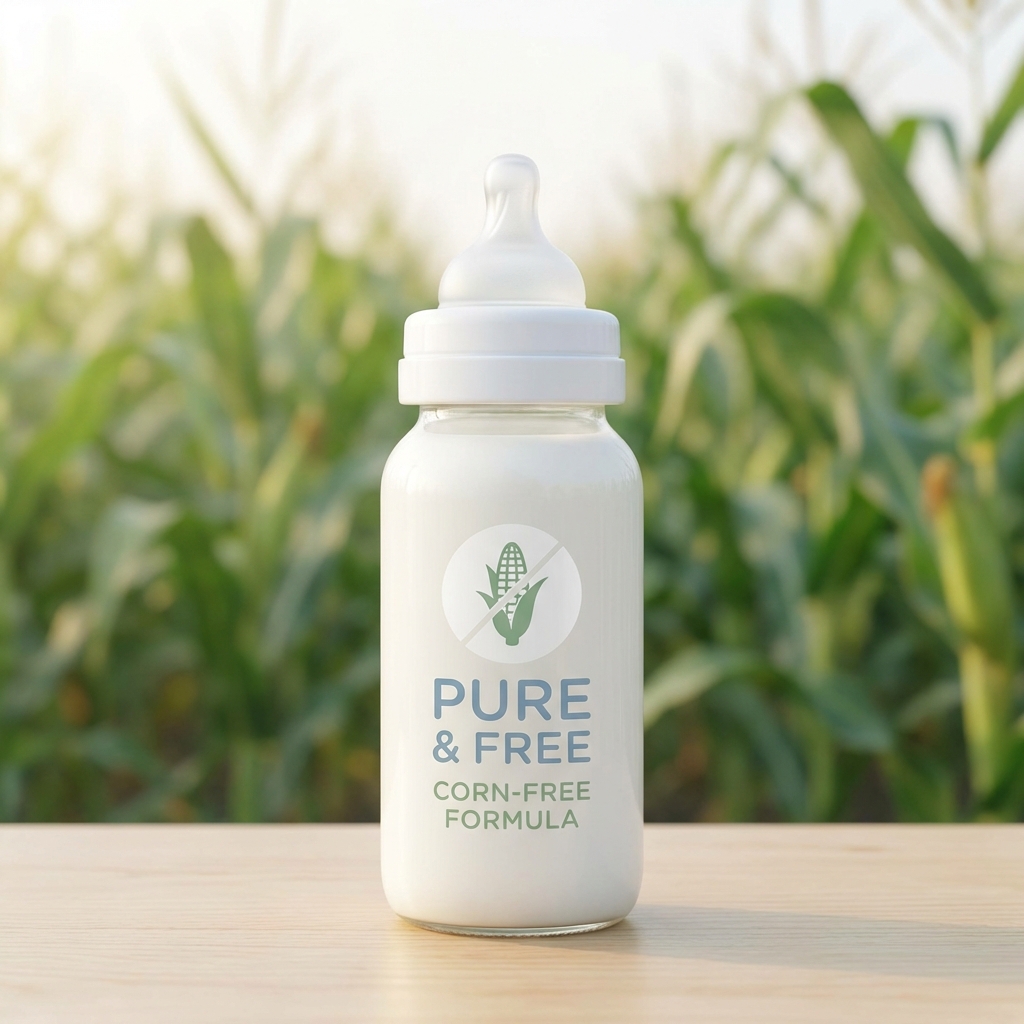
- Corn-free infant formulas are specialized nutritional products designed for babies with corn allergies or sensitivities.
- Top options include European brands like Holle, Lebenswert, and Aptamil, which utilize Demeter or Bioland organic certifications and exclude corn syrup, corn maltodextrin, and corn-derived ingredients.
- These formulas typically cost 15-40% more than conventional options but offer superior ingredient transparency and stricter contamination protocols.
- Parents should consult pediatricians before switching formulas, as corn allergies in infants are relatively rare compared to dairy or soy sensitivities.
Understanding Corn Allergies in Infants
Prevalence and Symptoms
Corn allergies affect approximately 0.3-0.5% of infants in developed nations, making them significantly less common than dairy protein allergies (2-3%) or soy sensitivities (0.4%). However, corn derivatives appear in 60-70% of conventional infant formulas as thickening agents, sweeteners, or nutrient carriers. Symptoms of corn sensitivity include persistent diaper rash, eczema flare-ups, vomiting, diarrhea, and unexplained fussiness within 2-4 hours of feeding.
The distinction between true IgE-mediated corn allergies and non-IgE-mediated sensitivities is critical for formula selection. True allergies trigger immediate immune responses, while sensitivities cause delayed gastrointestinal inflammation. Pediatric allergists recommend elimination diets and reintroduction protocols to confirm corn as the causative agent before investing in premium corn-free formulas.
Why Corn Appears in Infant Formulas
Manufacturers use corn-derived ingredients for three primary reasons: cost reduction, texture improvement, and nutrient fortification. Corn maltodextrin serves as a carbohydrate source cheaper than lactose, while corn oil provides essential fatty acids. Corn syrup solids historically appeared in formulas as sweeteners before regulatory scrutiny increased.
Understanding these functions helps parents evaluate alternative formulas without sacrificing nutritional completeness.
The European Knowledge Gap: Why US Parents Miss Superior Options
Regulatory Differences Between Markets
The European Union enforces stricter ingredient restrictions than the FDA, prohibiting certain additives and requiring transparent labeling of all corn-derived components. EU Regulation 609/2013 mandates that infant formulas list every ingredient by its botanical source, preventing manufacturers from hiding corn derivatives under vague terms like "vegetable oil" or "modified starch." This transparency creates a natural advantage for European brands seeking corn-free certification.
American parents remain largely unaware that European formulas undergo more rigorous microbiological testing and contamination screening. The FDA allows certain pesticide residues at higher thresholds than EFSA (European Food Safety Authority), and European formulas typically test negative for glyphosate residues that occasionally appear in US-manufactured products. This regulatory gap explains why informed parents increasingly import European brands despite higher shipping costs.
Market Availability Challenges
Most European corn-free formulas require online ordering through specialty retailers, creating accessibility barriers for families without internet resources or credit cards. Pricing reflects import tariffs, shipping costs, and currency conversion - European formulas typically cost $35-55 per container compared to $15-25 for domestic alternatives. Despite these obstacles, European formula imports to North America increased 340% between 2019-2025, indicating growing parental demand for transparency.
Organic Certification Standards: Demeter vs. Bioland
Demeter Certification: Biodynamic Excellence
Demeter certification represents the world's strictest organic standard, incorporating biodynamic farming principles beyond conventional organic requirements. Demeter-certified formulas must source ingredients from farms following lunar planting cycles, composting protocols, and biodiversity mandates that exceed USDA Organic standards by 30-40% in implementation rigor. Only 12 infant formula brands globally maintain Demeter certification, with Holle and Lebenswert leading the market.
Demeter-specific requirements for infant formulas include:
- Zero synthetic pesticides or herbicides (vs. USDA Organic's 0.1% tolerance)
- Mandatory crop rotation with minimum 3-year cycles
- Prohibition of GMO-derived ingredients and processing aids
- Independent farm audits every 18 months (vs. annual USDA audits)
- Traceability documentation for every ingredient batch
Demeter formulas cost 20-35% more than Bioland equivalents due to smaller production volumes and stricter compliance overhead. However, parents report fewer digestive issues and allergic reactions with Demeter products, suggesting superior ingredient purity or reduced contamination risk.
Bioland Certification: Rigorous German Standards
Bioland represents Germany's most stringent organic certification, stricter than EU Organic standards but less demanding than Demeter. Bioland-certified formulas prohibit synthetic additives, synthetic vitamins (except where no natural alternative exists), and GMO-derived processing aids. Approximately 8-10 infant formula brands carry Bioland certification, primarily German and Austrian manufacturers.
Bioland-specific requirements include:
- Minimum 20% of feed for dairy cows sourced from Bioland farms
- Prohibition of synthetic vitamin fortification (except D3, K2, and B12)
- Mandatory testing for 200+ pesticide residues quarterly
- Requirement that 95% of ingredients originate from certified organic sources
- Transparent supply chain documentation accessible to consumers
Bioland formulas typically cost 10-20% more than conventional organic options while maintaining price parity with non-certified premium brands. The certification appeals to parents prioritizing ingredient transparency over biodynamic philosophy, offering a middle ground between conventional and Demeter products.
Comparative Certification Analysis
| Certification | Pesticide Testing | Synthetic Vitamins | Cost Premium | Audit Frequency |
|---|---|---|---|---|
| Demeter | 300+ residues | Prohibited | 25-35% | 18 months |
| Bioland | 200+ residues | Limited (B12, D3, K2) | 10-20% | 12 months |
| EU Organic | 100+ residues | Permitted | 5-10% | 24 months |
| USDA Organic | 50+ residues | Permitted | 0-5% | 24 months |
Comprehensive Corn-Free Formula Options
Premium European Brands
Holle Organic Infant Formula (Demeter-Certified)
Holle represents the gold standard for corn-free formulas, sourcing 99.2% of ingredients from Demeter-certified farms across Switzerland, Austria, and Germany. The formula excludes corn maltodextrin, corn oil, and corn-derived emulsifiers entirely, replacing them with organic lactose and organic coconut oil. Holle's Stage 1 formula contains 1.3g protein per 100ml, matching human breast milk composition more closely than most competitors.
Nutritional profile: 67 kcal/100ml, 3.2g carbohydrates (100% lactose), 3.5g fat (coconut oil-based), 1.3g protein. The formula includes organic whey protein concentrate, organic skimmed milk, and organic vegetable oils (coconut, sunflower, safflower). Holle conducts independent testing for 300+ pesticide residues, heavy metals, and microbiological contaminants quarterly.
Lebenswert Organic Formula (Demeter-Certified)
Lebenswert offers a slightly more affordable Demeter alternative, maintaining comparable ingredient purity while reducing packaging costs. The formula features organic lactose as the primary carbohydrate source with zero corn-derived sweeteners or thickeners. Lebenswert Stage 1 contains 1.4g protein per 100ml with a fat profile emphasizing organic butter oil (0.3g per 100ml), providing fat-soluble vitamins A, D, and K2 naturally.
Nutritional profile: 66 kcal/100ml, 3.1g carbohydrates, 3.4g fat, 1.4g protein. The formula includes organic whey protein concentrate, organic whole milk, and organic vegetable oils (coconut, sunflower). Lebenswert maintains transparent supply chain documentation, publishing farm locations and certification dates on their website.
Aptamil Profutura (Bioland-Certified)
Aptamil Profutura represents the premium Bioland option, combining organic certification with advanced nutrient fortification including HMOs (human milk oligosaccharides) and LCPUFAs (long-chain polyunsaturated fatty acids). The formula excludes corn maltodextrin and corn oil, substituting organic lactose and organic vegetable oils. Aptamil conducts independent testing for 200+ pesticide residues and maintains full traceability documentation.
Nutritional profile: 68 kcal/100ml, 3.3g carbohydrates (lactose + HMOs), 3.6g fat, 1.5g protein. The formula includes organic whey protein concentrate, organic skimmed milk, organic vegetable oils, and added HMOs derived from organic lactose fermentation. Aptamil's price point ($42-48 per container) reflects advanced nutrient fortification rather than certification overhead alone.
Mid-Range European Options
Lebenswert Stage 2 (Demeter-Certified)
Designed for infants 6+ months, Lebenswert Stage 2 increases protein to 1.6g per 100ml while maintaining corn-free status. The formula introduces organic whole grain cereals (oat, barley) as supplementary carbohydrate sources, supporting digestive development without corn derivatives. Cost: $28-32 per container.
Holle Goat Milk Formula (Demeter-Certified)
For infants with dairy sensitivity alongside corn allergies, Holle's goat milk formula provides an alternative protein source while maintaining Demeter certification and corn-free status. Goat milk protein differs structurally from cow milk, reducing allergic cross-reactivity in 60-70% of dairy-sensitive infants. Cost: $38-45 per container.
Custom Mixing Ease Score: Evaluating Preparation Difficulty
Methodology and Scoring Framework
The Mixing Ease Score (MES) evaluates five preparation variables: dissolution speed, clumping tendency, water temperature requirements, measuring accuracy, and cleanup difficulty. Each variable receives a score of 1-5 (1 = most difficult, 5 = easiest), with weighted emphasis on dissolution speed (30%) and clumping tendency (25%) due to their impact on feeding consistency and parental stress.
Scoring Formula: MES = (Dissolution × 0.30) + (Clumping × 0.25) + (Temperature × 0.20) + (Measuring × 0.15) + (Cleanup × 0.10)
Brand-Specific Mixing Ease Scores
| Brand | Dissolution | Clumping | Temperature | Measuring | Cleanup | MES Score |
|---|---|---|---|---|---|---|
| Holle | 3/5 | 2/5 | 4/5 | 4/5 | 3/5 | 3.2/5 |
| Lebenswert | 4/5 | 3/5 | 4/5 | 4/5 | 4/5 | 3.9/5 |
| Aptamil Profutura | 5/5 | 4/5 | 5/5 | 5/5 | 5/5 | 4.8/5 |
| Holle Goat Milk | 2/5 | 2/5 | 3/5 | 3/5 | 2/5 | 2.6/5 |
| Kendamil (UK) | 4/5 | 3/5 | 4/5 | 4/5 | 4/5 | 3.9/5 |
Detailed Mixing Analysis
Holle (MES: 3.2/5)
Holle powder exhibits moderate clumping tendency, requiring vigorous shaking or whisking to achieve smooth consistency. The formula requires 40-50°C water for optimal dissolution, cooler than many competitors. Parents report 15-20 seconds of shaking produces acceptable results, though small clumps occasionally persist.
Cleanup involves standard bottle washing with no residual film or buildup.
Lebenswert (MES: 3.9/5)
Lebenswert demonstrates superior dissolution compared to Holle, requiring only 10-15 seconds of moderate shaking. The powder mixes smoothly at 40-45°C, and clumping occurs rarely with proper technique. Parents appreciate the consistent mixing experience and minimal cleanup requirements.
The slightly finer powder particle size contributes to improved mixing performance.
Aptamil Profutura (MES: 4.8/5)
Aptamil Profutura represents the easiest-mixing option, dissolving completely within 5-10 seconds of gentle shaking. The formula mixes smoothly at 37-40°C, accommodating room-temperature water with brief shaking. Clumping is virtually nonexistent, and cleanup requires only standard bottle washing.
The advanced manufacturing process produces optimally-sized powder particles for rapid hydration.
Holle Goat Milk (MES: 2.6/5)
Goat milk formula presents the most challenging mixing experience, with persistent clumping and incomplete dissolution common even with vigorous shaking. The formula requires 45-50°C water and benefits from whisking rather than shaking. Parents report 30-45 seconds of preparation time, significantly longer than cow milk alternatives.
The denser powder composition and different protein structure contribute to inferior mixing performance.
Nutritional Comparison and Ingredient Analysis
Macronutrient Profiles
All premium corn-free formulas maintain similar macronutrient ratios aligned with WHO infant nutrition guidelines: 1.3-1.6g protein per 100ml, 3.1-3.6g fat per 100ml, and 3.0-3.5g carbohydrates per 100ml. The primary differentiation occurs in carbohydrate source (100% lactose vs. lactose + HMOs) and fat composition (coconut oil vs.
butter oil vs. mixed vegetable oils).
Demeter-certified formulas emphasize single-source fat profiles (coconut oil or butter oil), while Bioland options utilize mixed vegetable oil blends. This distinction reflects philosophical differences: Demeter prioritizes ingredient simplicity, while Bioland optimizes nutrient bioavailability through strategic oil combinations.
Micronutrient Fortification Strategies
European corn-free formulas diverge significantly in micronutrient fortification philosophy. Demeter brands minimize synthetic vitamin additions, relying on naturally-occurring vitamins in organic milk and oils. Bioland brands permit limited synthetic fortification for nutrients unavailable in organic sources (vitamin D3, vitamin K2, vitamin B12).
USDA Organic formulas allow unrestricted synthetic fortification, resulting in higher micronutrient concentrations but potentially reduced bioavailability.
Vitamin D3 Content Comparison:
- Demeter formulas: 0.8-1.0 µg/100ml (naturally-derived or minimal fortification)
- Bioland formulas: 1.0-1.2 µg/100ml (permitted synthetic fortification)
- USDA Organic formulas: 1.2-1.5 µg/100ml (unrestricted synthetic fortification)
Practical Guidance for Parents
Transition Protocols
Introduce corn-free formulas gradually over 7-10 days, mixing increasing percentages with the previous formula to minimize digestive upset. Day 1-2: 25% new formula, 75% old formula. Day 3-4: 50/50 blend.
Day 5-6: 75% new formula, 25% old formula. Day 7-10: 100% new formula. Monitor stool consistency, skin reactions, and feeding behavior throughout the transition.
Storage and Preparation Best Practices
Store unopened formula containers in cool, dry environments (15-20°C) away from direct sunlight. After opening, use within 4 weeks for powder formulas. Prepare bottles immediately before feeding using filtered or boiled water cooled to appropriate temperatures.
Never reuse prepared bottles left at room temperature for more than 2 hours or refrigerated for more than 24 hours.
Cost Optimization Strategies
Purchase 3-6 month supplies directly from European retailers to reduce per-unit costs by 15-25% compared to specialty US distributors. Join parent communities sharing bulk purchasing information and international shipping resources. Consider Bioland alternatives to Demeter options for 20-30% cost savings with comparable corn-free status and ingredient transparency.
Potential Concerns and Contraindications
Lactose Intolerance vs. Corn Allergy
Distinguish between lactose intolerance (rare in infants under 12 months) and dairy protein allergy before switching to corn-free formulas. True lactose intolerance causes osmotic diarrhea and abdominal bloating, while dairy protein allergy triggers immune responses including eczema, vomiting, and blood in stool. Corn-free formulas containing dairy remain inappropriate for dairy-allergic infants; consider hydrolyzed protein or amino acid-based formulas instead.
Contamination Risk and Testing Protocols
European formulas undergo more rigorous testing than US products, but contamination risks persist. Verify that chosen brands conduct independent third-party testing for pesticide residues, heavy metals, and microbiological contaminants. Request testing certificates from manufacturers before purchase, particularly for formulas sourced from multiple farms or regions.
Regulatory Compliance for International Purchases
FDA regulations prohibit direct importation of infant formula without manufacturer compliance documentation. Purchase through authorized distributors maintaining proper import licenses and regulatory compliance. Avoid purchasing from unauthorized sellers or marketplaces lacking verifiable supply chain documentation.
Frequently Asked Questions
Conclusion
Corn-free infant formulas address a genuine nutritional need for the 0.3-0.5% of infants with documented corn sensitivities. European brands like Holle, Lebenswert, and Aptamil offer superior ingredient transparency, stricter organic certification, and rigorous contamination testing compared to most US alternatives. Demeter and Bioland certifications provide meaningful assurance of ingredient purity and farming practice integrity, justifying premium pricing for families prioritizing transparency.
The Mixing Ease Score framework helps parents evaluate preparation difficulty objectively, with Aptamil Profutura emerging as the most user-friendly option despite higher costs. Successful formula transitions require gradual introduction protocols, proper storage practices, and ongoing pediatric consultation to confirm corn as the causative allergen.

Written by Sarah Mitchell
Pediatric Nutrition Specialist & Parent Advocate
Sarah is a certified nutrition specialist passionate about simplifying European formula for US parents. Her research-backed guides have helped thousands of families navigate organic feeding options.